Introduction
For most people, eating bread, pasta, or other foods containing gluten causes no problem. But for someone with celiac disease, even small amounts of gluten can trigger an immune reaction that damages the lining of the small intestine.
Over time, this damage can interfere with the absorption of iron, vitamins, minerals, and other nutrients. That is why this autoimmune condition can cause much more than digestive discomfort.
So what actually happens inside the intestine when someone with celiac disease eats gluten?
What Is Celiac Disease?
Celiac disease is a chronic autoimmune condition triggered by gluten.
Gluten is a group of proteins naturally found in:
- wheat
- barley
- rye
- and related grains such as spelt, durum, farro, and triticale.
When a person with this autoimmune condition eats gluten, the immune system mistakenly reacts to it and begins attacking tissue in the small intestine.
This makes celiac disease different from a simple food intolerance.
The condition can develop at almost any age, and symptoms vary widely. Some people experience obvious digestive problems, while others may have few or no digestive symptoms at all.
What Happens When Gluten Reaches the Small Intestine?
Digestion begins in the mouth and stomach, but much of the absorption of nutrients happens in the small intestine.
After gluten-containing food is eaten, gluten proteins are broken down into smaller pieces during digestion.
In people with this condition, some of these fragments trigger an abnormal immune response.
Instead of simply treating them as harmless components of food, the immune system reacts as though they are a threat. This causes inflammation in the lining of the small intestine.
If exposure to gluten continues, repeated inflammation gradually damages the structure responsible for absorbing nutrients.
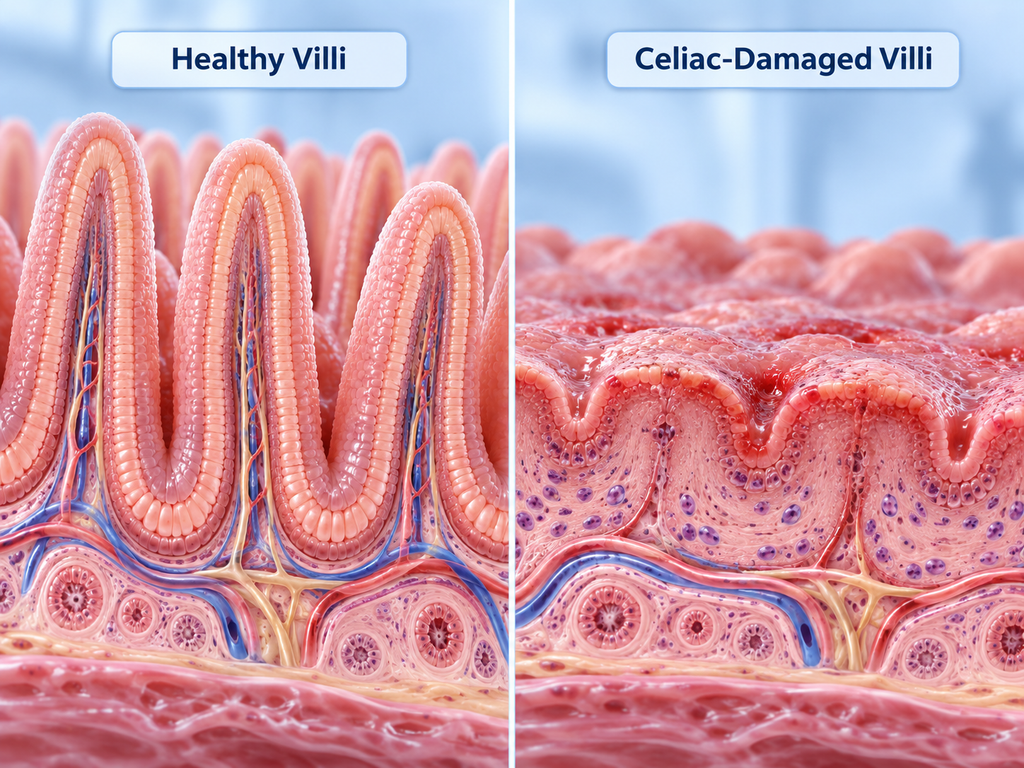
The lining of the small intestine is covered with tiny finger-like structures called villi. These villi greatly increase the surface area available for absorbing nutrients from food.
In celiac disease, repeated gluten-triggered inflammation can shorten and flatten the villi, reducing the intestine’s ability to absorb nutrients effectively.
The Small Intestinal Villi: Why They Matter
Healthy villi help the body absorb substances such as: iron, calcium, folate, vitamins, carbohydrates, fats, and proteins.
In untreated celiac disease, inflammation can cause these villi to become shortened, flattened, or damaged. This process reduces the intestine’s ability to absorb nutrients effectively.
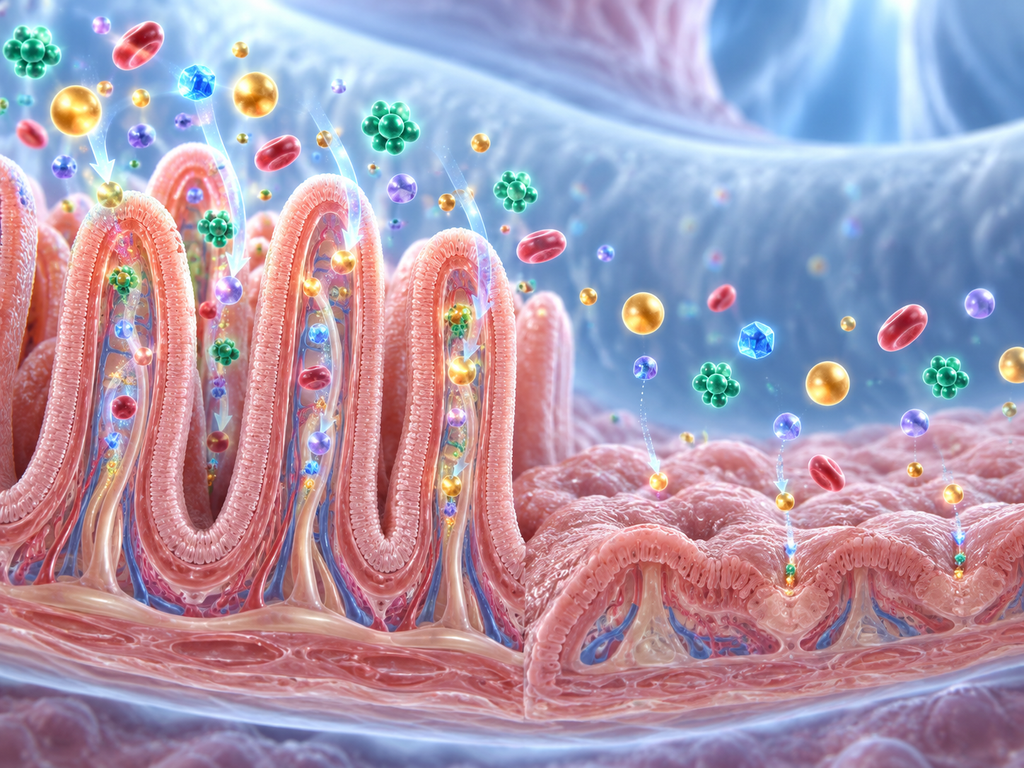
In simple terms, the intestine may still receive enough food, but the body becomes less efficient at absorbing the nutrients it needs.
This is known as malabsorption.
Over time, this can contribute to deficiencies in nutrients such as iron, folate, calcium, and vitamin D.
Damage to the intestinal villi can reduce nutrient absorption and contribute to deficiencies commonly associated with celiac disease.
How Intestinal Damage Causes Symptoms
The symptoms of this autoimmune condition can vary considerably from one person to another.
When the small intestine cannot properly digest and absorb nutrients, digestive symptoms may develop.
Common symptoms include:
- abdominal bloating
- diarrhea
- constipation
- abdominal discomfort
- excessive gas
- nausea
- bulky or greasy stools
- unexplained weight loss
Damage to the intestine may also temporarily reduce the ability to digest lactose, which means some people develop symptoms after consuming dairy products.
However, this autoimmune condition does not only affect digestion.
Symptoms Outside the Digestive System
Because the small intestine is responsible for absorbing nutrients needed throughout the body, celiac disease can cause symptoms in many different organs.
Iron may not be absorbed efficiently, for example, which can contribute to iron-deficiency anemia.
Other possible signs include:
- persistent fatigue
- headaches
- mouth ulcers
- bone or joint discomfort
- reduced bone density
- tingling or numbness in the hands and feet
- vitamin or mineral deficiencies
- problems with growth in children
Some people develop an intensely itchy skin condition known as dermatitis herpetiformis.
Importantly, a person can have significant intestinal damage even without severe digestive symptoms.
Why Some People Develop Celiac Disease
Celiac disease does not occur simply because someone eats a large amount of gluten.
Genetics play an important role.

Most people with celiac disease carry particular genetic variants associated with the immune system. However, having these genes does not mean that someone will definitely develop the disease.
The condition therefore appears to result from a combination of genetic susceptibility, gluten exposure, and immune-system activity.
The condition therefore appears to result from a combination of genetic susceptibility, gluten exposure, and immune-system activity.
Having a close relative with celiac disease increases the likelihood of developing it.
Celiac Disease Is Not the Same as Gluten Sensitivity
This autoimmune condition is sometimes confused with non-celiac gluten sensitivity.
The two conditions are different.
Someone with non-celiac gluten sensitivity may experience symptoms such as bloating, abdominal discomfort, diarrhea, or fatigue after eating foods containing gluten or wheat.
However, the characteristic autoimmune damage to the small intestinal villi seen in the disease is not present.
Celiac disease is also different from a wheat allergy, in which the immune system reacts to proteins in wheat through a different allergic mechanism. Correct diagnosis therefore matters.
How Is Celiac Disease Diagnosed?
Diagnosis usually begins with blood tests.
These tests look for antibodies associated with the immune reaction seen in this autoimmune condition. One of the most commonly used tests measures antibodies against tissue transglutaminase, often called tTG antibodies. If testing suggests celiac disease, an upper endoscopy may be performed.
During this procedure, a doctor passes a thin flexible camera through the mouth and into the digestive tract. Small tissue samples can be taken from the beginning of the small intestine.
These samples are examined under a microscope to look for characteristic intestinal damage.
Do Not Stop Eating Gluten Before Testing
This is an important point.
Someone who suspects celiac disease should generally not begin a gluten-free diet before completing diagnostic testing unless advised by a healthcare professional.
Blood tests and intestinal biopsies look for changes caused by exposure to gluten.
If gluten has already been removed from the diet, antibody levels may fall and the intestine may begin healing. This can make the disease more difficult to detect.
How Is Celiac Disease Treated?
There is currently no medication that allows a person with celiac disease to eat gluten safely.
The main treatment is a strict lifelong gluten-free diet.
This means avoiding foods containing wheat, barley, rye, and ingredients derived from these grains unless they are confirmed to be gluten-free.
Foods that commonly contain gluten include bread, regular pasta, many breakfast cereals, cakes, pastries, biscuits, and beer.
Gluten can also appear in less obvious products such as sauces, soups, processed foods, seasonings, and some supplements or medications.
Reading labels carefully is therefore an important part of managing the condition.
What Foods Are Naturally Gluten-Free?
A gluten-free diet does not have to consist entirely of specially manufactured gluten-free products.
Many everyday foods are naturally free from gluten.
Examples include rice, potatoes, corn, quinoa, buckwheat, meat, fish, eggs, vegetables, fruit, legumes, nuts, and most unprocessed dairy products.
Oats are naturally free from wheat gluten, but they are frequently contaminated with wheat, barley, or rye during processing. People with celiac disease should therefore choose oats specifically labeled gluten-free.
A dietitian familiar with this autoimmune condition can help create a balanced diet while reducing the risk of accidental gluten exposure.
What About Cross-Contamination?
For people with celiac disease, avoiding obvious sources of gluten is only part of the challenge.
Gluten can accidentally enter otherwise gluten-free food during preparation.
For example, contamination can occur through shared:
toasters, cutting boards, cooking utensils, flour-covered surfaces, frying oil, or food preparation areas.
Someone with this autoimmune condition may therefore need separate preparation methods or equipment in kitchens where gluten-containing foods are also prepared.
Even exposure that does not cause immediate symptoms may still be relevant because intestinal damage can occur without obvious warning signs.
Can the Small Intestine Heal?
Yes.
When gluten is removed from the diet, the immune reaction settles and the intestinal lining can gradually recover.
Symptoms may begin improving within days or weeks, although complete healing takes longer.
As the villi recover, the intestine becomes better able to absorb nutrients again.
Children often heal more quickly, while complete intestinal recovery in adults may take months or even several years.
Doctors may use symptoms, blood tests, nutritional markers, and sometimes additional intestinal biopsies to monitor recovery.
What Happens If Celiac Disease Is Left Untreated?
Continued exposure to gluten means repeated inflammation and ongoing intestinal injury.
Over time, untreated the disease may contribute to nutritional deficiencies, anemia, weakened bones, weight loss, and other health problems.
Some complications are uncommon, but the risk of certain serious intestinal conditions is increased in people with poorly controlled or untreated celiac disease.
This is why treatment matters even when symptoms are mild.
Can Someone With Celiac Disease Eat a Little Gluten?
For someone with confirmed this autoimmune condition, the goal is not simply to reduce gluten.
The goal is to avoid it consistently.
A person may not experience symptoms after every accidental exposure, but the absence of symptoms does not necessarily mean the intestine has not been affected.
That makes celiac disease different from diets where occasional exceptions are simply a matter of preference.
The Bottom Line
Celiac disease is much more than difficulty digesting bread or pasta.
It is an autoimmune condition in which gluten triggers inflammation and damages the lining of the small intestine.
The tiny intestinal villi responsible for absorbing nutrients can become flattened and less effective, potentially leading to digestive problems, anemia, nutrient deficiencies, fatigue, bone problems, and symptoms elsewhere in the body.
The good news is that intestinal damage can heal.
For people with confirmed celiac disease, a strict lifelong gluten-free diet allows inflammation to decrease, helps the intestinal villi recover, and prevents further damage.
Anyone who suspects this autoimmune condition should speak with a healthcare professional before removing gluten from their diet, because diagnostic testing is most reliable while gluten is still being consumed.
Frequently Asked Questions
Is celiac disease an allergy to gluten?
No. Celiac disease is an autoimmune disorder. It is different from a wheat allergy and from non-celiac gluten sensitivity.
Can celiac disease develop later in life?
Yes. Celiac disease can be diagnosed in childhood or adulthood, including in people who previously ate gluten without obvious problems.
Does celiac disease permanently damage the intestine?
In most people, intestinal damage can substantially heal after gluten is removed from the diet. Recovery may take longer in adults than in children.
Can you have celiac disease without diarrhea?
Yes. Some people have constipation, anemia, fatigue, nutritional deficiencies, neurological symptoms, skin problems, or almost no noticeable symptoms.
Can people with celiac disease eat oats?
Many people with celiac disease can tolerate oats, but they should generally use oats specifically labeled gluten-free because regular oats are often contaminated with wheat, barley, or rye.
Should I try a gluten-free diet to see if I feel better?
If celiac disease is suspected, diagnostic testing should usually be completed before starting a gluten-free diet. Removing gluten beforehand can make blood tests and intestinal biopsies less reliable.
Sources
- National Institute of Diabetes and Digestive and Kidney Diseases (NIDDK) — Celiac Disease, Diagnosis, Treatment and Diet. NIDDK — Celiac Disease
- American College of Gastroenterology (ACG) — American College of Gastroenterology
- American College of Gastroenterology — Celiac Disease
- Mayo Clinic — Celiac Disease Diagnosis and Treatment