
Introduction
Strength training and regular exercise offer enormous benefits, but common gym injuries can still occur when training load, technique, fatigue, or recovery are poorly managed.
Some injuries happen suddenly during a heavy lift or awkward movement, while others develop gradually from repeated overload, poor recovery, or training through pain.
Understanding the most common gym injuries — their causes, symptoms, warning signs, and prevention strategies — can help you train more safely without becoming afraid of challenging your body.
In this guide, we’ll explain the injuries most often associated with gym training, how to distinguish normal post-workout soreness from a true injury, and when it is time to seek medical help.
Why Gym Injuries Happen
Many common gym injuries develop when training stress exceeds the body’s current capacity.
Sometimes this happens suddenly — for example, during a heavy lift, an awkward repetition, or an explosive movement. In other cases, the injury develops gradually after repeated training stress without enough recovery.
Heavy training itself is not necessarily dangerous. Problems are more likely to occur when load, volume, fatigue, technique, and recovery are poorly managed.
Common Risk Factors
- Poor exercise technique
- Increasing weight too quickly
- Excessive training volume
- Training through pain
- Inadequate recovery
- Fatigue and loss of movement control
- Previous injuries
- Poor preparation for a new exercise
The goal is not to avoid challenging training, but to give your body enough time to adapt to progressively greater demands.
Most Common Gym Injuries
Gym-related injuries can affect muscles, tendons, ligaments, joints, and other structures. Some develop gradually from repeated overload, while others occur suddenly during a specific movement or lift.
1.Shoulder Injuries
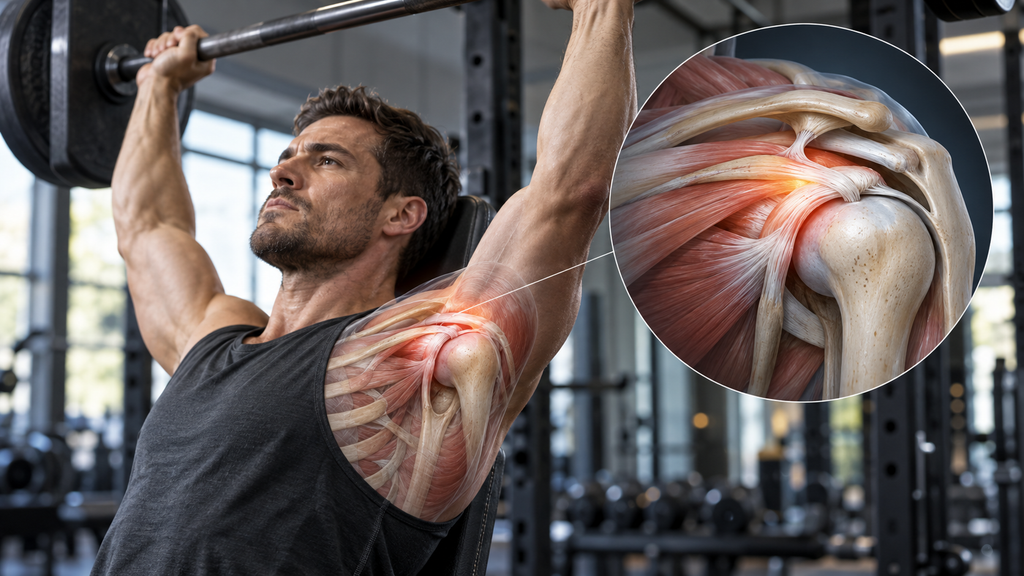
Rotator Cuff and Shoulder Overload
The shoulder is one of the most mobile joints in the body. That mobility allows a wide range of movement, but it also requires several muscles and tendons to work together to keep the joint stable. Repeated pressing, pulling, and overhead movements can place considerable stress on the rotator cuff and other shoulder structures, particularly when training volume increases too quickly or technique deteriorates because of fatigue.
Common Causes
- Repetitive overhead pressing
- Excessive bench press or shoulder training volume
- Sudden increases in training load
- Poor movement control under fatigue
- Repeatedly training through existing shoulder pain
Common Symptoms
- Pain when raising the arm
- Pain during pressing movements
- Shoulder weakness
- Reduced range of motion
- Tenderness around the shoulder
- Night pain in some cases
2. Lower Back Injuries
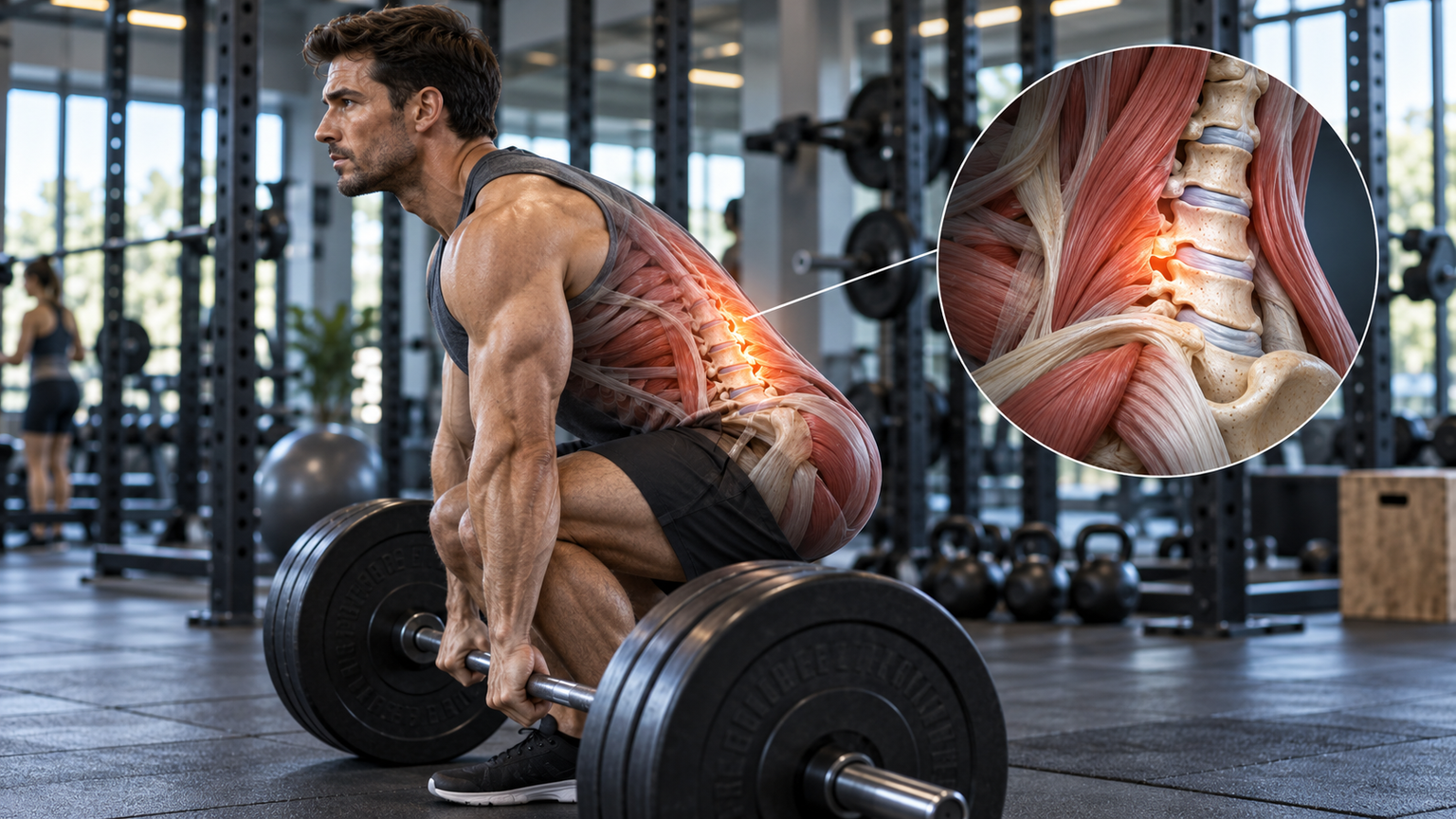
Strains and Exercise-Related Low Back Pain
Lower back pain is common in people who perform resistance training, but pain after lifting does not automatically mean that a spinal disc has been damaged.
Muscles, ligaments, joints, discs, and nerves can all contribute to lower back symptoms. In the gym, pain often appears after sudden heavy loading, poor control under fatigue, or a rapid increase in training intensity.
Common Causes
- Sudden heavy loading
- Loss of control during deadlifts or squats
- Excessive fatigue
- Rapid increases in weight or training volume
- Repeatedly training through existing back pain
Common Symptoms
- Localized lower back pain
- Stiffness
- Muscle spasm
- Pain during bending or lifting
- Reduced movement because of discomfort
3. Knee Injuries and Knee Pain
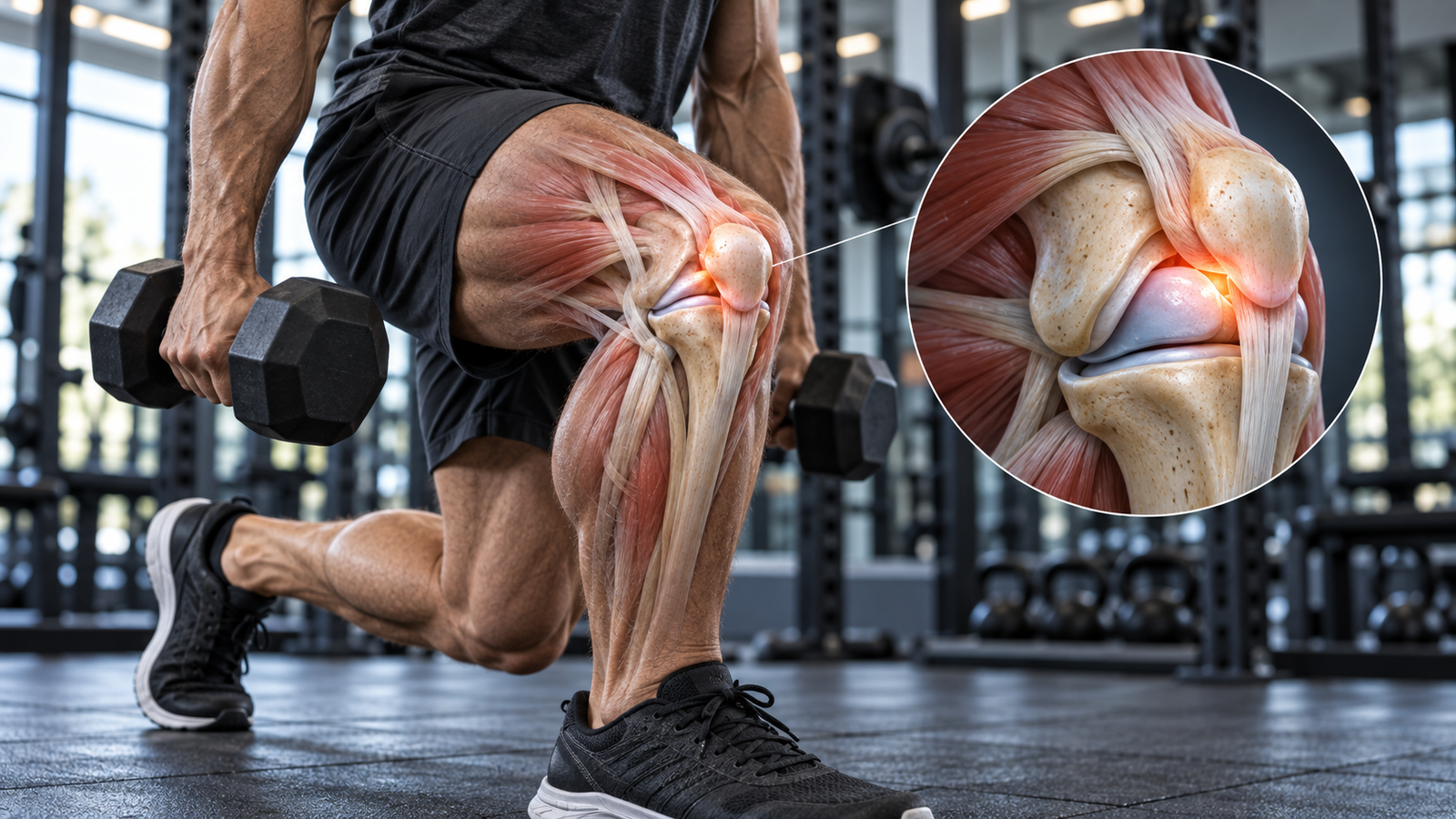
Patellofemoral Pain and Training-Related Overload
Knee pain is common in people who perform squats, lunges, running, jumping, or other repetitive lower-body exercises. In many cases, symptoms develop gradually rather than after one dramatic injury. One common problem is patellofemoral pain, which is often felt around or behind the kneecap. Training load, exercise selection, recovery, strength, and movement control can all influence how much stress the knee experiences.
Common Causes
- Sudden increases in squat or running volume
- Repetitive high-impact activity Inadequate recovery
- Training beyond current capacity
- Repeatedly performing movements that provoke pain
Common Symptoms
- Pain around or behind the kneecap
- Discomfort during squats or lunges
- Pain when climbing stairs
- Stiffness after prolonged sitting
- Pain during jumping or running
4. Muscle Strains
Common Muscle Pulls and Training-Related Strains
Muscle strains are among the most common gym-related injuries. They occur when muscle fibers or the tendon attached to the muscle are stretched beyond their current capacity.
In the gym, strains may happen during explosive movements, heavy lifting, or sudden increases in training intensity. Commonly affected areas include the hamstrings, chest, calves, groin, biceps, and lower back.
Common Causes
- Explosive or sudden movements
- Heavy eccentric loading
- Lifting beyond current capacity
- Inadequate warm-up
- Returning to training too aggressively after time off
Common Symptoms
- Sudden localized pain
- Tenderness in the affected muscle
- Swelling or bruising
- Reduced strength
- Pain during contraction or stretching
5. Elbow and Wrist Injuries
Tendon Overload and Repetitive Strain
Elbow and wrist pain often develops gradually rather than after one dramatic injury. Repeated gripping, pulling, pressing, and curling movements can overload the tendons and surrounding tissues over time. Symptoms are especially common when training volume increases quickly, grip demands are high, or the same movement patterns are repeated too frequently without enough recovery.
6. Ankle Sprains
Ligament Injuries and Unstable Landings
Ankle sprains occur when the ligaments that support the joint are stretched or torn, most often after the foot rolls unexpectedly during landing, running, or rapid changes of direction.
They are less common during controlled machine-based strength training, but they can occur during box jumps, treadmill running, plyometric exercises, lunges, functional training, or other movements that involve balance and impact.
7. Tendon Tears
Less Common, but Potentially Serious
Tendon tears are less common than muscle strains or overuse pain, but they are important because a major rupture can significantly reduce strength and function and may require specialist treatment.
In gym settings, tendon injuries are most often associated with sudden high-force loading, explosive movements, or heavy eccentric stress. The pectoralis major, biceps, and Achilles tendons are among the structures that can be affected.
Common Causes
- Sudden high-force loading
- Heavy eccentric movements
- Explosive lifting or jumping
- Attempting loads beyond current capacity
- Returning too quickly after a previous tendon injury
Common Symptoms
- Sudden sharp pain
- A noticeable “pop” or tearing sensation
- Rapid swelling or bruising
- Significant weakness
- Loss of normal function
- Visible change in muscle shape in some injuries
DOMS or Injury? How to Tell the Difference
Muscle soreness after a hard workout is common, but not every painful sensation means that an injury has occurred. Delayed onset muscle soreness, or DOMS, usually appears after unfamiliar or demanding exercise and tends to develop gradually rather than suddenly. A true injury is more suspicious when pain is sharp, localized, associated with a specific movement, or accompanied by swelling, bruising, weakness, or loss of function.
Typical DOMS
- Usually begins several hours after training
- Often peaks around 24–72 hours later
- Feels like diffuse muscle soreness or stiffness
- Common after unfamiliar or high-volume exercise
- Usually improves gradually over several days
- Does not usually cause major swelling or loss of function
Possible Injury
- Sudden or sharp pain
- Pain clearly linked to one repetition or movement
- Very localized tenderness
- Swelling or bruising
- A popping or tearing sensation
- Significant weakness
- Loss of normal movement or function
- Symptoms that worsen rather than improve
Key point: Soreness is not proof that a workout was effective. You can build strength and muscle without experiencing severe DOMS after every session.
Important: If you are unsure whether pain is normal post-workout soreness or an injury, avoid repeatedly provoking the painful movement until the symptoms are clearer or professionally assessed.
When Should You Seek Medical Help?
Many minor gym-related aches and strains improve with reduced activity and time. However, certain symptoms may indicate a more significant injury and should not be ignored.
Medical evaluation is especially important when pain is severe, function is clearly reduced, or symptoms suggest possible damage to a tendon, ligament, bone, joint, or nerve.
Seek Medical Evaluation If You Have
- Severe or worsening pain
- Significant swelling or bruising
- Inability to bear weight normally
- Marked weakness
- Loss of normal joint movement
- Persistent pain that is not improving
- Numbness or tingling
- A visible deformity
- A suspected fracture or dislocation
- A sudden “pop” followed by loss of strength or function
- Symptoms that continue to worsen despite reducing activity
Seek Urgent Medical Attention If You Develop
- Progressive weakness in an arm or leg
- Major or spreading numbness
- Difficulty walking after a back or neck injury
- Loss of bladder or bowel control
- Numbness around the groin or inner thighs
- Severe pain after significant trauma
Important: Chest pain, fainting, severe unexplained shortness of breath, or sudden neurological symptoms during exercise should not be treated as ordinary gym injuries and require urgent medical assessment. If someone suddenly collapses during exercise, the cause may be cardiovascular rather than musculoskeletal. Learn more in Sudden Cardiac Arrest Explained.
How to Prevent Gym Injuries
Most gym injuries cannot be prevented completely, but sensible training habits can significantly reduce unnecessary risk.
1. Warm Up Properly
Prepare your body for the movements you are about to perform and use progressive warm-up sets before heavy lifts.
2. Use Controlled Technique
Maintain good control throughout each repetition, especially when fatigue begins to increase.
3. Progress Gradually
Avoid large sudden increases in weight, volume, training frequency, or exercise intensity.
4. Manage Recovery
Adequate sleep, nutrition, and rest between demanding sessions help the body adapt to training stress.
5. Respect Pain
Do not repeatedly train through sharp, worsening, or clearly localized pain.
Key Takeaways
✓ Most gym injuries develop from sudden overload, repetitive stress, or poor recovery.
✓ Sharp, localized pain is more concerning than normal post-workout soreness.
✓ Progressive overload should be gradual, not abrupt.
✓ Persistent weakness, swelling, numbness, or loss of function should not be ignored.
✓ Good technique, sensible progression, and adequate recovery reduce unnecessary injury risk.
Frequently Asked Questions
What is the most common gym injury?
Muscle strains, tendon irritation, shoulder pain, lower back pain, and knee-related overuse problems are among the most common issues seen in people who train regularly.
How can I tell DOMS from an injury?
DOMS usually develops gradually after training and improves over several days. Sudden sharp pain, swelling, bruising, weakness, or loss of function is more suggestive of an injury.
Should I train through pain?
Mild post-workout soreness may be normal, but sharp, worsening, or clearly localized pain should not be ignored. Modify or stop movements that repeatedly provoke significant pain.
When should I see a doctor after a gym injury?
Seek medical evaluation if you have severe pain, major swelling or bruising, significant weakness, numbness, inability to bear weight, visible deformity, or symptoms that are not improving.
Conclusion
Understanding common gym injuries can help you recognize warning signs and train more safely. Many training-related problems can be reduced with sensible progression, good technique, and adequate recovery. The key is knowing the difference between normal post-workout soreness and symptoms that may indicate a true injury.
Train hard, but train intelligently. Listening to pain, respecting recovery, and seeking medical help when symptoms are severe or persistent can help you stay active and strong for the long term.
Sources
- National Institute of Arthritis and Musculoskeletal and Skin Diseases (NIAMS) — Sports Injuries
- American Academy of Orthopaedic Surgeons (AAOS / OrthoInfo) — Sports Injuries and Musculoskeletal Conditions
- American College of Sports Medicine (ACSM) — Delayed Onset Muscle Soreness (DOMS)
- Mayo Clinic — Muscle Strains: Symptoms and Causes