Sudden cardiac arrest (SCA) is a life-threatening medical emergency in which the heart suddenly loses its ability to pump blood effectively. When this happens, blood flow to the brain and other vital organs rapidly decreases, and the person can become unconscious within seconds.
Sudden cardiac arrest can happen with little or no warning. Immediate recognition, cardiopulmonary resuscitation (CPR), and rapid use of an automated external defibrillator (AED), when appropriate, are critical parts of the response.
But what exactly happens inside the heart during cardiac arrest? What causes it, and how is it different from a heart attack?
What Is Sudden Cardiac Arrest?
Sudden cardiac arrest occurs when the heart suddenly stops pumping blood effectively.
The heart has an electrical system that controls the rate and rhythm of each heartbeat. Normally, electrical signals travel through the heart in a coordinated pattern, allowing the heart muscle to contract and pump blood.
During cardiac arrest, this electrical activity can become severely abnormal. Dangerous arrhythmias such as ventricular fibrillation or ventricular tachycardia can prevent the heart from producing an effective heartbeat.
When circulation stops, the brain and other organs no longer receive enough oxygen-rich blood. Without rapid treatment, cardiac arrest can quickly become fatal.
Cardiac Arrest vs. Heart Attack: What’s the Difference?
Cardiac arrest and heart attack are not the same condition.
A heart attack occurs when blood flow to part of the heart muscle becomes blocked. It is primarily a circulation problem.
Cardiac arrest, on the other hand, occurs when the heart’s electrical system malfunctions and the heart can no longer pump blood effectively. It is primarily an electrical problem.
The two conditions can be related. A heart attack can damage heart tissue and sometimes trigger a dangerous heart rhythm that results in cardiac arrest.
In simple terms:
- Heart attack: blood flow to heart muscle is blocked.
- Cardiac arrest: the heart suddenly stops pumping blood effectively.
- A heart attack can sometimes trigger cardiac arrest.
What Happens to the Heart During Cardiac Arrest?
The heart depends on precisely coordinated electrical signals.
One particularly dangerous rhythm is ventricular fibrillation (VF). During VF, the lower chambers of the heart develop chaotic electrical activity and can no longer contract effectively.
Another potentially dangerous rhythm is ventricular tachycardia (VT). The ventricles beat extremely rapidly, which can prevent the heart from filling and pumping blood effectively.
In either situation, circulation can collapse.
An AED can analyze the heart’s rhythm and determine whether an electrical shock is appropriate. For certain shockable rhythms, early defibrillation can be lifesaving.
What Causes Sudden Cardiac Arrest?
Sudden cardiac arrest can have several possible causes.
Coronary Artery Disease
Coronary artery disease can reduce blood flow to the heart and increase the risk of dangerous arrhythmias.
A heart attack related to coronary artery disease can also leave scar tissue that interferes with the heart’s electrical system.
Cardiomyopathy
Cardiomyopathy refers to diseases affecting the heart muscle. Depending on the type, the heart muscle can become enlarged, thickened, or weakened.
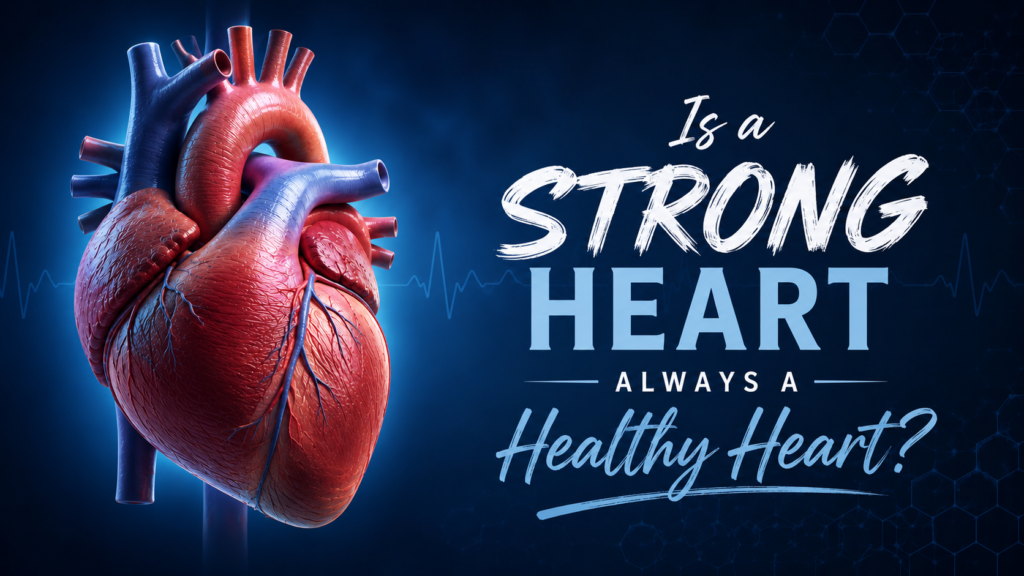
A heart that appears strong or enlarged is not necessarily a healthy heart, particularly when structural changes are caused by underlying disease rather than normal athletic adaptation.
Some forms can increase the risk of serious ventricular arrhythmias and sudden cardiac arrest.
Electrical Disorders
Some conditions primarily affect the electrical system of the heart.
Examples include long QT syndrome and Brugada syndrome. These disorders can increase the risk of dangerous arrhythmias, sometimes even when there is no major structural abnormality of the heart.
Other Possible Causes
Other factors associated with cardiac arrest can include:
- Severe abnormalities of potassium or magnesium
- Certain congenital heart conditions
- Severe heart failure
- Significant oxygen deprivation
- Some toxic exposures or medications
- Previous cardiac arrest
- Certain inherited heart conditions
Importantly, cardiac arrest can occasionally occur in people who have no previously diagnosed heart disease.
Can Sudden Cardiac Arrest Happen Without Warning?
Yes.
Sudden cardiac arrest can occur unexpectedly, and some people have no obvious warning symptoms.
However, possible symptoms before cardiac arrest can include:
- Chest discomfort
- Shortness of breath
- Unexplained weakness
- Palpitations
- Dizziness
- Fainting or near-fainting
These symptoms can have many different causes, but unexplained fainting or significant cardiac symptoms should be medically evaluated.
Why Can Cardiac Arrest Happen in Young People?
Although cardiac arrest is more common with increasing age and cardiovascular disease, it can also occur in younger people.
Possible causes include inherited electrical disorders, cardiomyopathies, congenital heart conditions, and other underlying cardiac abnormalities.
Unexplained fainting during exercise, recurrent unexplained palpitations, or a family history of sudden unexplained death may warrant medical evaluation.
This is particularly relevant to sports medicine. For more information, read our article:
What Happens to the Brain During Cardiac Arrest?
The brain requires a continuous supply of oxygen-rich blood.
When the heart stops pumping effectively, blood flow to the brain falls dramatically. The person may become unconscious very quickly.
This is why cardiac arrest is a time-critical emergency.
CPR can help maintain circulation until an AED or professional medical treatment becomes available. Early recognition, CPR and rapid defibrillation are key components of the response to cardiac arrest.
What Should You Do If Someone Suddenly Collapses?
If someone suddenly collapses and is unresponsive, treat the situation as a medical emergency.
1. Call Emergency Services
Call your local emergency medical service immediately.
If another person is present, ask them to call while you assess the person and begin providing assistance.
2. Start CPR
If the person is unresponsive and not breathing normally, begin CPR as soon as possible.
For adult cardiac arrest, current resuscitation guidance recommends chest compressions at a rate of 100–120 compressions per minute. If you are not trained or are unsure what to do, follow instructions from the emergency dispatcher.
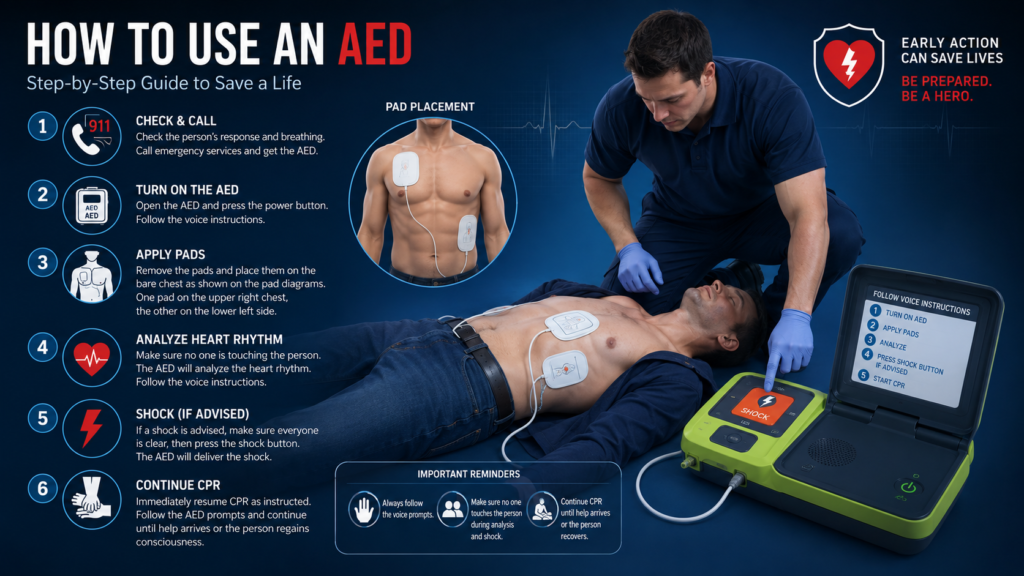
3. Use an AED
If an automated external defibrillator is available, turn it on and follow its instructions.
AEDs are designed to analyze the heart rhythm and determine whether a shock is appropriate. They are intended to guide rescuers through the process.
4. Continue Until Help Arrives
Continue CPR and follow the AED’s instructions until emergency medical professionals arrive or the person shows clear signs of recovery.
Why Is an AED So Important?
An AED can identify certain dangerous heart rhythms and deliver a shock when appropriate.
For shockable rhythms such as ventricular fibrillation, rapid defibrillation can be critical. The sooner an effective rhythm is restored, the sooner normal circulation can potentially return.
This is why public access to AEDs, early CPR, and rapid activation of emergency medical services are important parts of the chain of survival.
The Bottom Line
Sudden cardiac arrest is a medical emergency in which the heart suddenly loses its ability to pump blood effectively.
It is different from a heart attack, although a heart attack can sometimes trigger cardiac arrest.
Cardiac arrest may be associated with coronary artery disease, previous heart damage, cardiomyopathy, inherited electrical disorders, congenital heart conditions, and other medical problems.
Because the brain and other vital organs depend on continuous circulation, every second matters.
Recognizing an unresponsive person, activating emergency medical services, starting CPR, and using an AED when available can make a critical difference.
Understanding cardiac arrest is not about diagnosing the condition yourself. It is about recognizing a life-threatening emergency and knowing that immediate action can help save a life.
Medical Disclaimer
This article is intended for general educational and informational purposes only. It does not replace professional medical advice, diagnosis, or treatment. If you or someone else is experiencing a medical emergency, contact your local emergency medical service immediately.
Medical Sources
- American Heart Association (AHA) — What Is Cardiac Arrest?
- American Heart Association (AHA) — Cardiac Arrest vs. Heart Attack.
- Mayo Clinic — Sudden Cardiac Arrest: Symptoms and Causes.
- Resuscitation Council UK — 2025 Adult Basic Life Support Guidelines.
- Resuscitation Council UK — CPR and AED Training in the Community.
2 Comments
Comments are closed.