
When we think about a strong heart, we usually imagine a heart that can pump blood efficiently, support exercise, and keep the body supplied with oxygen.
Regular physical activity can absolutely improve cardiovascular fitness. Exercise can help the heart pump blood more efficiently, improve exercise capacity, and produce structural and electrical adaptations known as exercise-induced cardiac remodeling.
But there is an important distinction:
A strong heart is not necessarily the same thing as a healthy heart.
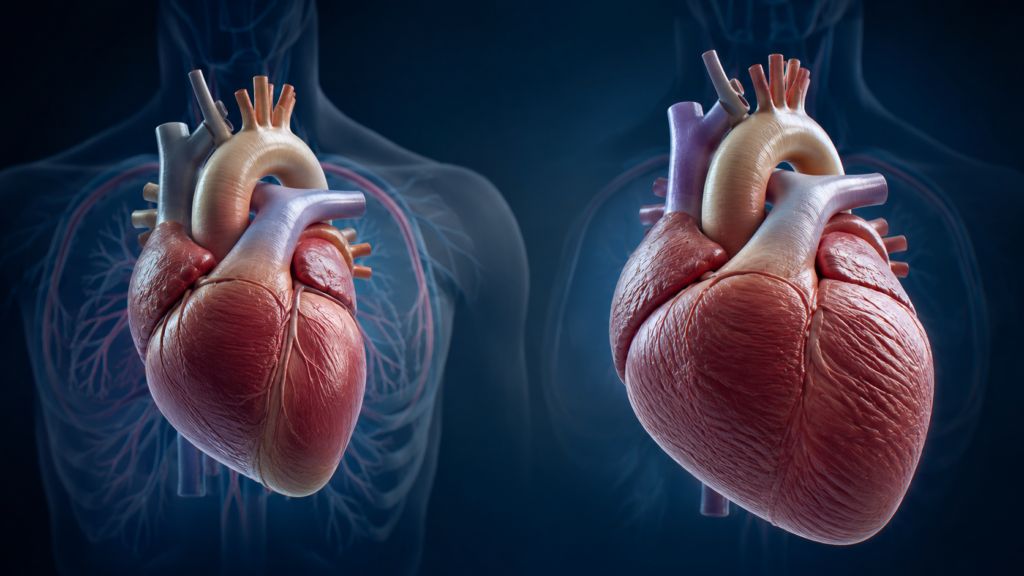
A heart can become more efficient because of regular training. But changes in heart muscle thickness or size can also occur because of high blood pressure or an underlying heart condition.
So what makes a heart healthy—and when can a “strong” heart actually be a warning sign?
What Does a “Strong Heart” Actually Mean?
The heart is a muscular organ that continuously pumps blood throughout the body.
When people describe someone as having a “strong heart,” they may be referring to several different things:
- good cardiovascular fitness
- the ability to exercise without unusual symptoms
- efficient pumping of blood
- a good stroke volume
- a lower resting heart rate
- the ability to increase cardiac output during exercise
However, “heart strength” is not a single medical measurement.
Cardiologists evaluate the heart using several different characteristics, including its structure, pumping and relaxation function, electrical activity, blood pressure, symptoms, and cardiovascular risk factors.
That is why a lower resting heart rate or a larger heart muscle cannot, by itself, tell us whether a person’s heart is healthy.
How Exercise Changes the Heart
During exercise, the body’s muscles need more oxygen and nutrients.
The cardiovascular system responds by increasing blood flow. The heart beats faster and pumps more blood with each contraction.
With regular training, the cardiovascular system adapts to these repeated demands.
Depending on the type and intensity of exercise, adaptations can include:
- increased stroke volume
- improved exercise capacity
- changes in heart chamber dimensions
- changes in heart muscle mass
- improved cardiovascular efficiency
- a lower resting heart rate in many trained individuals
These changes are often described as athlete’s heart or exercise-induced cardiac remodeling.
The European Society of Cardiology notes that athletic training can produce changes in heart structure and function that are physiological adaptations to exercise.
The important point is that cardiac enlargement or increased muscle mass does not automatically mean disease.
What Is Athlete’s Heart?
Athlete’s heart describes normal cardiovascular adaptations associated with sustained athletic training.
The exact pattern depends partly on the type of exercise.
Endurance training places substantial demands on blood volume and cardiac output. Strength and power training can create different hemodynamic demands.
As a result, the heart may undergo changes in chamber size, wall thickness, mass, and electrical activity.
For many athletes, these adaptations are normal and help the cardiovascular system meet the demands of training.
However, there is a challenge:
Some normal athletic adaptations can resemble changes caused by heart disease.
This is why distinguishing athlete’s heart from pathological cardiac hypertrophy can sometimes require more than a simple examination. Echocardiography, ECG findings, cardiac MRI, symptoms, family history, and training history may all contribute to the assessment.
When a Thick Heart Muscle Can Be a Problem
A thicker heart muscle is not automatically a sign of better fitness.
One important condition is left ventricular hypertrophy (LVH).
The left ventricle is the heart’s main pumping chamber. It pushes oxygen-rich blood into the systemic circulation.
When the left ventricle has to work against increased pressure for a prolonged period, its walls can become thicker.
One common cause is high blood pressure.
According to the American Heart Association, long-term pressure overload can cause the walls of the left ventricle to thicken. Over time, the thickened muscle can become stiffer and may not function normally.
This is very different from saying:
“More heart muscle means a stronger heart.”
The reason for the thickening matters.
High Blood Pressure Can Change the Heart
High blood pressure may not produce obvious symptoms, but it can place increased workload on the heart over time.
The heart must generate enough pressure to move blood through the arteries. If the resistance remains elevated, the left ventricle can undergo structural remodeling.
Initially, this is a response to increased workload.
Over time, however, pathological remodeling can contribute to:
- increased stiffness of the heart muscle
- impaired relaxation
- reduced cardiac efficiency
- heart failure
- abnormal heart rhythms
- increased cardiovascular risk
The American Heart Association identifies high blood pressure as one of the important causes associated with LVH.
This is one reason why being physically fit does not replace checking your blood pressure.
Athlete’s Heart vs. Pathological Hypertrophy
This is one of the most important distinctions in sports cardiology.
An athlete can have an enlarged or thickened heart as a normal adaptation to training.
Another person can have similar structural findings because of a disease process.
The two situations may sometimes overlap in appearance, which is why clinicians consider the entire clinical picture.
Physiological Adaptation
Athlete’s heart may be associated with:
- regular intensive training
- increased exercise capacity
- appropriate cardiac remodeling
- preserved cardiac function
- normal physiological responses to exercise
Pathological Remodeling
Abnormal cardiac hypertrophy may be associated with:
- high blood pressure
- valve disease
- hypertrophic cardiomyopathy
- abnormal cardiac function
- abnormal electrical findings
- symptoms
- a relevant family history
The European Society of Cardiology emphasizes that imaging can help distinguish physiological athletic remodeling from conditions such as hypertrophic cardiomyopathy.
Can a Very Fit Person Still Have Heart Disease?
Yes.
Excellent physical fitness does not completely eliminate the possibility of cardiovascular disease.
Some cardiac conditions are structural or inherited and can occur in people who exercise regularly and perform at a high level.
This is particularly relevant when an athlete experiences symptoms that are unusual for them.
Warning signs that deserve medical evaluation include:
- fainting or near-fainting, especially during exercise
- unexplained chest pain
- unusual shortness of breath
- recurrent or unexplained palpitations
- unexplained decline in exercise performance
- a family history of unexplained sudden cardiac death or inherited heart disease
These symptoms do not automatically mean that a serious heart condition is present.
However, they should not simply be dismissed as normal consequences of being fit or athletic.
Does a Low Resting Heart Rate Mean You Have a Healthy Heart?
Not necessarily.
A lower resting heart rate is common in well-trained athletes because regular exercise can increase stroke volume and improve cardiovascular efficiency.
The heart may therefore be able to circulate an adequate amount of blood with fewer beats per minute at rest.
But resting heart rate is only one piece of information.
A healthy cardiovascular assessment may also consider:
- blood pressure
- symptoms
- ECG
- exercise response
- medical history
- family history
- echocardiography when indicated
- other cardiac imaging when clinically necessary
One number cannot determine overall heart health.
Can Someone Be Fit and Still Have High Blood Pressure?
Yes.
Physical activity is an important part of cardiovascular health, but it does not make someone immune to high blood pressure.
Genetics, age, diet, sleep, kidney health, medications, other medical conditions, and lifestyle factors can all influence blood pressure.
This is why someone who exercises regularly can still develop hypertension.
Regular exercise should be viewed as one part of cardiovascular prevention—not a guarantee against every heart condition.
Heart Fitness vs. Heart Health
These two concepts overlap, but they are not identical.
Heart Fitness
Heart fitness describes how effectively the cardiovascular system responds to physical activity.
It can include:
- aerobic capacity
- exercise tolerance
- cardiovascular endurance
- recovery after exercise
- the ability to increase cardiac output during physical activity
Heart Health
Heart health is broader.
It includes:
- healthy heart structure
- normal pumping and relaxation
- appropriate blood pressure
- healthy blood vessels
- normal electrical activity
- absence of significant cardiovascular disease
- management of cardiovascular risk factors
This distinction explains why someone can be extremely fit and still have a cardiovascular problem that requires medical attention.
How Do Doctors Evaluate a “Strong” or Enlarged Heart?
If there is a reason to investigate the heart, doctors may use several different tools.
Blood Pressure Measurement
Blood pressure is one of the simplest and most important cardiovascular measurements.
Repeatedly elevated blood pressure can increase the workload on the heart and may contribute to LVH.
Electrocardiogram (ECG)
An ECG records the electrical activity of the heart.
It can provide information about:
- heart rate
- rhythm
- conduction
- certain electrical patterns associated with cardiac conditions
Echocardiogram
An echocardiogram uses ultrasound to visualize the heart.
It can assess:
- chamber dimensions
- wall thickness
- pumping function
- relaxation
- heart valves
- blood flow
It is particularly useful when clinicians need to evaluate structural changes in the heart.
Cardiac MRI
Cardiac magnetic resonance imaging can provide detailed information about heart structure and myocardial tissue.
In athletes with unexplained hypertrophy, cardiac MRI can sometimes help distinguish physiological remodeling from pathological conditions such as hypertrophic cardiomyopathy.
Exercise Testing
Exercise testing can show how the cardiovascular system responds to physical stress.
Depending on the clinical situation, doctors may evaluate exercise capacity, heart rate, blood pressure, symptoms, and ECG changes.
What Actually Makes a Heart Healthy?
A healthy heart is not necessarily the biggest, thickest, or most muscular heart.
Instead, cardiovascular health depends on how the heart is structured, how it functions, and the overall health of the cardiovascular system.
Important factors include:
Regular Physical Activity
Regular exercise provides major cardiovascular benefits and is an important component of a healthy lifestyle.
Healthy Blood Pressure
Keeping blood pressure under control reduces chronic pressure-related stress on the heart.
Balanced Nutrition
A balanced diet that includes a variety of vegetables, fruits, whole grains, legumes, and other nutrient-rich foods can support cardiovascular health.
Adequate Sleep
Good-quality sleep is an important component of overall cardiovascular health.
Avoiding Tobacco
Tobacco use damages blood vessels and substantially increases cardiovascular risk.
Managing Cardiovascular Risk Factors
Blood pressure, cholesterol, blood glucose, physical activity, smoking status, and family history all contribute to cardiovascular risk.
So, Is a Strong Heart Always a Healthy Heart?
No.
Exercise can make the cardiovascular system more efficient and can produce healthy adaptations in the heart.
But an increase in heart muscle thickness or size can have different causes.
In one person, it may represent a normal response to athletic training.
In another, it may be related to high blood pressure, valve disease, hypertrophic cardiomyopathy, or another cardiac condition.
The important question is not simply:
“How strong or how big is the heart?”
“Why has the heart changed, and how well is it functioning?”
That distinction is at the heart of understanding cardiovascular health.
The Bottom Line
A strong heart is valuable — but strength alone does not define heart health.
Regular physical activity can improve cardiovascular fitness and produce beneficial adaptations. At the same time, heart muscle thickening or enlargement can sometimes reflect disease rather than fitness.
A truly healthy heart is one that can efficiently meet the body’s demands while maintaining appropriate structure, function, and electrical stability.
The goal isn’t simply to build a stronger heart.
The goal is to maintain a heart that is strong, efficient, and healthy.
Frequently Asked Questions
Does exercise make your heart bigger?
Regular intensive exercise can cause physiological changes in heart size, chamber dimensions, and muscle mass. These adaptations are often part of what is called athlete’s heart and are not necessarily signs of disease.
Is an enlarged heart always dangerous?
No. Heart enlargement can occur as a physiological response to training, but enlargement can also occur with medical conditions. The cause, structure, and function of the heart need to be considered.
Can athletes have heart disease?
Yes. Excellent fitness does not eliminate the possibility of structural or electrical heart disease. Concerning symptoms, abnormal tests, or a relevant family history may warrant further evaluation.
Is a low resting heart rate always healthy?
No. A low resting heart rate can be a normal adaptation to training, but heart rate should be interpreted together with symptoms, medical history, and other clinical findings.
Can high blood pressure make the heart muscle thicker?
Yes. Chronic high blood pressure can increase the workload on the left ventricle and contribute to left ventricular hypertrophy.
What is athlete’s heart?
Athlete’s heart refers to structural, functional, and electrical changes associated with sustained athletic training. These changes are generally considered physiological adaptations, although they can sometimes resemble cardiac disease and require careful assessment.
Medical Disclaimer
This article is for general educational and informational purposes only. It is not intended to replace professional medical advice, diagnosis, or treatment.
If you experience unexplained fainting, chest pain, unusual shortness of breath, recurrent palpitations, or other concerning symptoms—particularly during exercise—seek medical evaluation from a qualified healthcare professional.
References & Further Reading
- American Heart Association — Left Ventricular Hypertrophy (LVH).
- European Society of Cardiology — The Athlete’s Heart.
- American College of Cardiology — Left Ventricular Hypertrophy in Athletes.
- European Society of Cardiology — Sports Cardiology and Exercise Guidelines.
Sudden Cardiac Arrest Explained: Causes, Warning Signs, and CPR
One Comment
Comments are closed.