Serbian version: Zašto se mladi sportisti iznenada sruše i preminu?
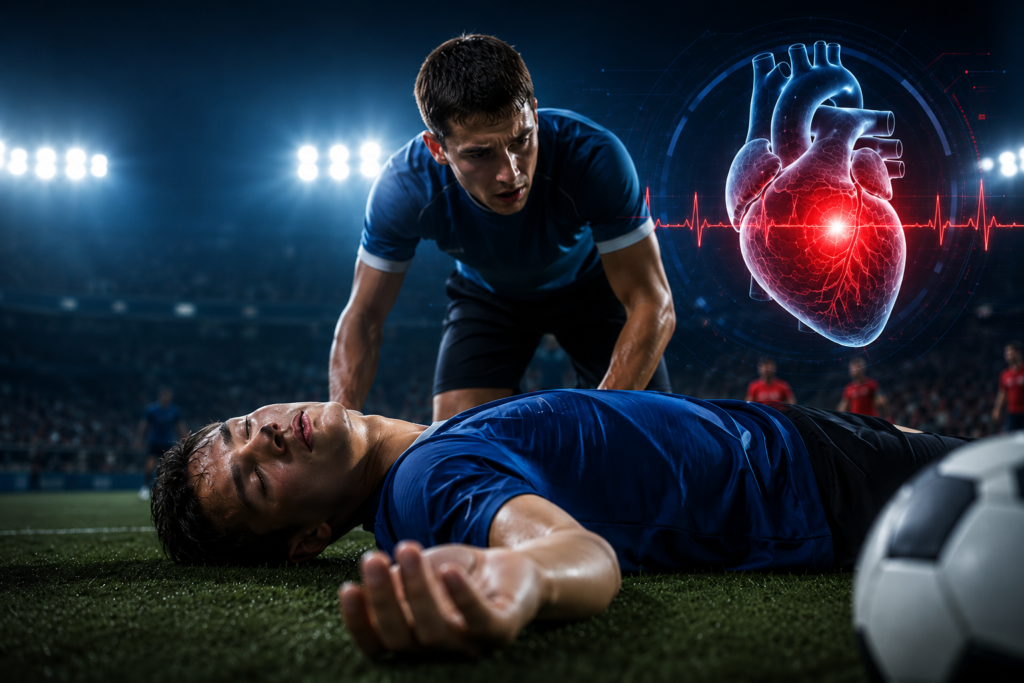
Sudden cardiac arrest in athletes is one of the most serious medical emergencies in sports. When a young, seemingly healthy athlete suddenly collapses during a game, the event can be shocking for teammates, spectators, and viewers. Although these incidents are relatively uncommon, understanding why they happen is essential for recognizing cardiac arrest quickly and responding effectively.
One of the first assumptions is often that the athlete has suffered a heart attack. However, a heart attack and sudden cardiac arrest are not the same thing.
In many cases, sudden collapse is caused by a sudden electrical or mechanical failure of the heart that prevents it from maintaining effective circulation. One of the most dangerous rhythms associated with cardiac arrest is ventricular fibrillation (VF), a chaotic electrical rhythm in which the ventricles no longer contract in a coordinated way.
For a person experiencing cardiac arrest, every second matters. Immediate recognition, cardiopulmonary resuscitation (CPR), and rapid defibrillation can make the difference between life and death.
Cardiac Arrest Is Not the Same as a Heart Attack
The terms heart attack and cardiac arrest are sometimes used interchangeably, but medically they describe different conditions.
A heart attack (myocardial infarction) occurs when blood flow to part of the heart muscle is significantly reduced or blocked, usually because of coronary artery disease. The affected heart muscle is deprived of oxygen.
Cardiac arrest, on the other hand, occurs when the heart suddenly stops pumping blood effectively. The problem is often electrical and may produce a life-threatening rhythm such as ventricular fibrillation or ventricular tachycardia.
The two conditions can be connected. A heart attack can damage the heart and trigger a dangerous ventricular arrhythmia that leads to cardiac arrest. However, cardiac arrest can also occur without a heart attack, particularly in younger people with certain inherited, structural, or electrical heart conditions.
How Does the Heart Normally Work?
The heart is a muscular pump that maintains blood circulation through the pulmonary and systemic circulations.
Oxygen-poor blood returning from the body enters the right atrium, passes into the right ventricle, and is pumped to the lungs. In the lungs, the blood is oxygenated and then returns to the left atrium.
From there, it passes into the left ventricle, which pumps oxygen-rich blood into the aorta and throughout the body.
For this process to work efficiently, the heart must contract in a coordinated sequence. That coordination depends on its electrical conduction system.
The normal heartbeat usually begins in the sinoatrial (SA) node, the heart’s natural pacemaker. Electrical impulses then spread through the atria and into the ventricular conduction system, producing coordinated contraction of the heart muscle.
The heart rate changes according to the body’s needs. Physical exercise, stress, temperature, hormones, and other factors can all affect how quickly the heart beats.
What Happens During Ventricular Fibrillation?
Ventricular fibrillation is a life-threatening cardiac arrhythmia in which the electrical activity of the ventricles becomes chaotic and disorganized.
Instead of producing coordinated contractions that eject blood, the ventricular muscle develops ineffective electrical activity. As a result, the heart can no longer maintain adequate circulation.
Blood flow to the brain and other vital organs rapidly falls. Because the brain is highly sensitive to interruption of oxygen delivery, the person usually becomes unresponsive within a very short period.
This explains why a person who appeared completely well only moments earlier can suddenly collapse during physical activity.
Ventricular fibrillation is a shockable rhythm. When it is present during cardiac arrest, rapid defibrillation is one of the most important interventions.
Why Is Defibrillation So Important?
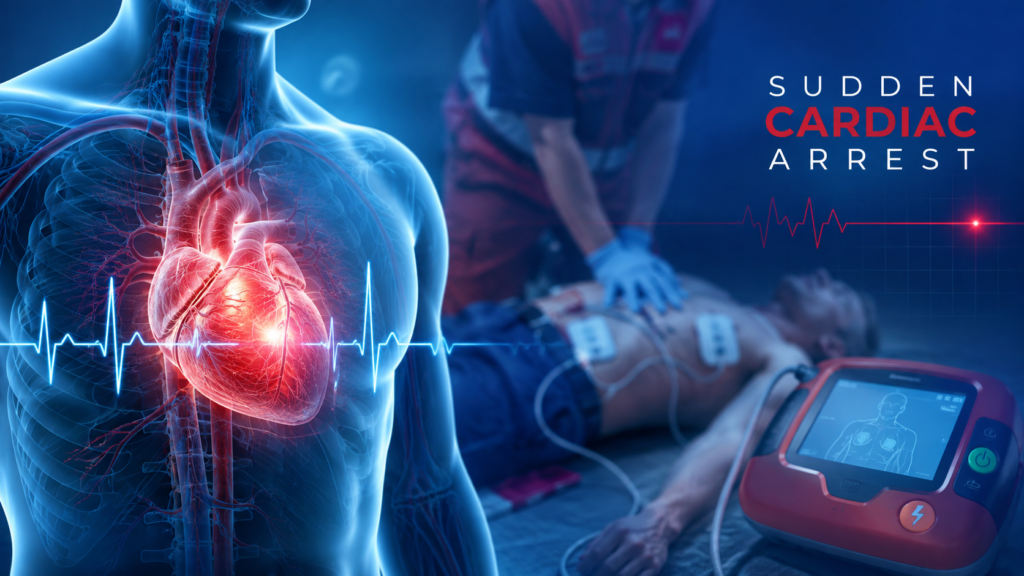
When cardiac arrest is caused by a shockable rhythm such as ventricular fibrillation, an automated external defibrillator (AED) or manual defibrillator can deliver an electrical shock to the heart.
Defibrillation should not simply be thought of as “restarting the heart.” The electrical shock briefly depolarizes a large amount of cardiac tissue and can interrupt the chaotic rhythm, allowing an organized rhythm to resume.
The timing is critical.
The longer a shockable rhythm continues without effective intervention, the lower the chance of successful resuscitation. This is why rapid access to an AED is so important in sports facilities, schools, workplaces, and other public locations.
An AED is designed to analyze the heart rhythm and determine whether a shock is appropriate. It should be used as soon as it becomes available in a suspected cardiac arrest.
CPR: What Happens Before Defibrillation?
When a person suddenly collapses, does not respond, and is not breathing normally, cardiac arrest should be suspected.
Emergency medical services should be activated immediately, while CPR should be started as soon as possible.
For adults, conventional CPR performed by trained rescuers generally consists of 30 chest compressions followed by 2 breaths, with chest compressions delivered at a rate of 100–120 per minute. For untrained bystanders, compression-only CPR is an important alternative while emergency services are being activated and help is arriving.
CPR does not usually terminate ventricular fibrillation itself. Its purpose is to maintain some blood flow to the brain and other vital organs until definitive treatment, particularly defibrillation, can be provided.
This is why modern resuscitation emphasizes the Chain of Survival:
- Early recognition of cardiac arrest and activation of emergency services
- Immediate CPR
- Rapid defibrillation
- Advanced medical care
- Post-cardiac-arrest care
- Recovery and rehabilitation
Why Can This Happen to Young and Elite Athletes?
Perhaps the most difficult question is how an athlete who trains every day and appears to be in excellent physical condition can experience sudden cardiac arrest.
The answer is complex.
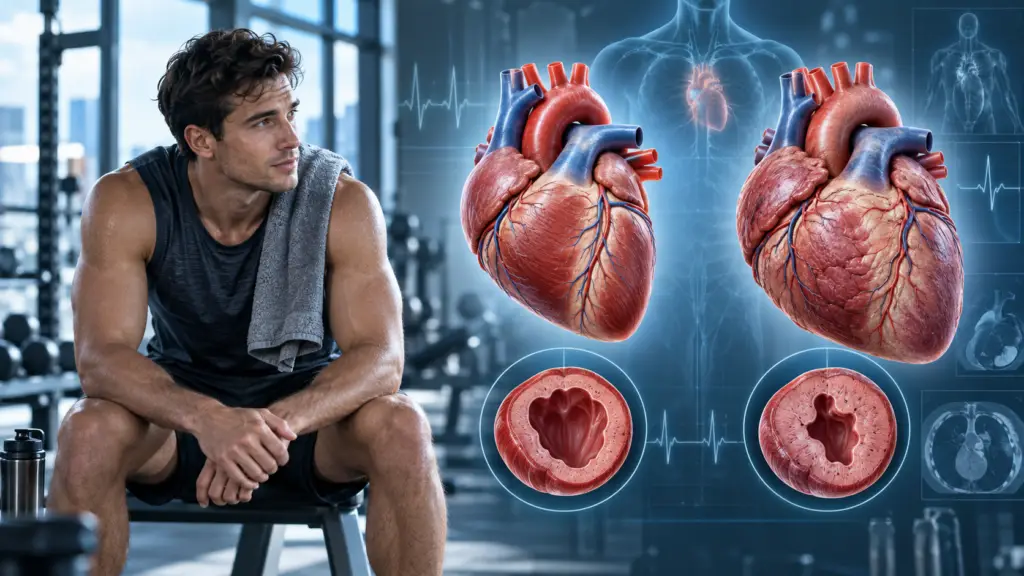
In young athletes, sudden cardiac arrest may be associated with previously unrecognized structural heart disease, inherited cardiomyopathies, congenital coronary abnormalities, or electrical disorders of the heart.
Potential conditions include:
- Hypertrophic cardiomyopathy
- Arrhythmogenic cardiomyopathy
- Anomalies of the coronary arteries
- Myocarditis
- Brugada syndrome
- Other inherited arrhythmia syndromes
Some of these conditions have a genetic basis. However, it would be inaccurate to say that every sudden cardiac arrest in a young athlete is caused by a genetic mutation.
Some acquired conditions can also be involved. In addition, commotio cordis can cause ventricular fibrillation after a sudden impact to the chest during a vulnerable phase of the cardiac cycle.
Intense physical activity may act as a trigger for a dangerous arrhythmia in a person who already has an underlying susceptibility. In other words, exercise may be the trigger rather than the underlying cause.
In athletes over approximately 35 years of age, atherosclerotic coronary artery disease becomes a more important cause of sudden cardiac death than it is in younger athletes.
Warning Signs That Should Not Be Ignored
Sudden cardiac arrest can occur without warning, but some athletes may experience symptoms beforehand.
Warning signs that deserve medical evaluation include:
- Fainting, especially during exercise
- Near-fainting or unexplained dizziness
- Chest pain or pressure during exertion
- Unexplained shortness of breath
- Palpitations or a sensation of an unusually rapid or irregular heartbeat
- A personal history of unexplained seizures or fainting
- A family history of premature sudden cardiac death
- A known cardiomyopathy or inherited heart rhythm disorder
These symptoms do not necessarily mean that a person has a dangerous heart condition. However, symptoms occurring during exercise, particularly fainting, should not simply be dismissed as part of athletic training.
Can Sudden Cardiac Death Be Prevented?
Prevention is challenging because some cardiac disorders can remain silent for years.
Pre-participation cardiovascular evaluation can help identify athletes who may need further investigation. Depending on the individual and the healthcare system, assessment may include a detailed medical and family history, physical examination, blood pressure measurement, and an ECG.
When symptoms or abnormal findings raise concern, additional tests may include echocardiography, ambulatory ECG monitoring, exercise testing, cardiac MRI, genetic testing, or other specialized investigations.
However, no screening strategy can identify every person who may be at risk. Screening approaches also need to balance potential benefits against false-positive results, unnecessary investigations, cost, and access to specialist care.
A particularly important part of the medical history is family history. Sudden unexplained death in a close relative at a young age may be an important clue to an inherited cardiac condition.
Prevention also extends beyond screening. Sports organizations should have a clear emergency action plan, appropriately trained personnel, and rapid access to AEDs.
What Is an Implantable Cardioverter-Defibrillator (ICD)?
Some people who have survived cardiac arrest or who are considered to be at high risk of life-threatening ventricular arrhythmias may be candidates for an implantable cardioverter-defibrillator (ICD).
An ICD is a battery-powered device implanted under the skin, usually in the upper chest. Depending on the system, leads connect the device to the heart and allow continuous monitoring of cardiac rhythm.
If the ICD detects a dangerous ventricular arrhythmia, it can deliver electrical therapy to terminate the rhythm. Many modern ICDs can also provide pacing when needed.
An ICD does not treat the underlying heart disease itself. Rather, it provides protection against certain potentially fatal arrhythmias in appropriately selected patients.
Whether an ICD is indicated depends on the individual’s diagnosis, previous cardiac events, risk of recurrent arrhythmia, and current clinical guidelines.
Christian Eriksen: A Powerful Example of Rapid Resuscitation
One of the most widely witnessed examples of cardiac arrest in professional sport occurred during UEFA EURO 2020. On June 12, 2021, Danish midfielder Christian Eriksen suffered a cardiac arrest and collapsed during Denmark’s match against Finland in Copenhagen.
The medical team’s rapid response and emergency treatment resulted in Eriksen being resuscitated on the field. UEFA later honored the medical team and Denmark captain Simon Kjær for their actions during the incident. Eriksen’s case demonstrated a fundamental principle of emergency medicine: rapid recognition, immediate resuscitation, and access to appropriate equipment can save a life.
His case also illustrates why sports organizations need trained medical personnel and a well-rehearsed emergency response plan rather than relying on screening alone.
The Bigger Lesson: Seconds Matter
The sudden collapse of a young athlete is a reminder that physical fitness does not make a person completely immune to cardiovascular disease.
In young athletes, potentially dangerous conditions may involve the heart muscle, coronary arteries, or the electrical system of the heart. In older athletes, coronary artery disease becomes increasingly important.
But the most important lesson is what happens after the collapse. If a person is unresponsive and not breathing normally, rapid recognition of cardiac arrest, immediate CPR, and early defibrillation can dramatically improve the chance of survival.
For sports clubs and organizations, this means having:
- A clear emergency response plan
- Personnel trained in CPR
- Rapid access to an AED
- Regular emergency drills
- Appropriate medical evaluation of athletes when symptoms or risk factors are present
The goal is not simply to identify every athlete who could ever be at risk. It is also to ensure that when cardiac arrest does occur, the people and equipment needed to respond are already there.
Conclusion
Sudden cardiac arrest in a young athlete is rare, but when it occurs, the consequences can be devastating.
It is important to distinguish cardiac arrest from a heart attack and to understand that young athletes can have underlying structural, inherited, or electrical heart conditions that may not have produced obvious symptoms before the event.
The most important factor once cardiac arrest occurs is not speculation about the cause but rapid action.
Early recognition, immediate CPR, rapid access to an AED, and appropriate advanced medical care form the foundation of the Chain of Survival.
The story of athletes who collapse suddenly on the field is therefore not only a story about cardiology. It is also a story about preparation, emergency response, medical training, and the importance of having the right equipment available when every second counts.
Frequently Asked Questions
Can a young athlete suffer cardiac arrest?
Yes. Although uncommon, cardiac arrest can occur in young athletes. It may be associated with inherited or structural heart conditions, abnormalities of the coronary arteries, electrical disorders, myocarditis, commotio cordis, and other causes.
Is cardiac arrest the same as a heart attack?
No. A heart attack is caused by reduced or blocked blood flow to the heart muscle. Cardiac arrest occurs when the heart suddenly stops pumping blood effectively. A heart attack can sometimes trigger cardiac arrest, but they are different medical conditions
What is ventricular fibrillation?
Ventricular fibrillation is a life-threatening abnormal rhythm in which the electrical activity of the heart’s ventricles becomes chaotic and the heart can no longer contract effectively enough to maintain circulation.
Can CPR stop ventricular fibrillation?
CPR generally does not terminate ventricular fibrillation. Its main purpose is to maintain blood flow to vital organs until defibrillation and advanced medical treatment can be provided.
Why is an AED important?
An AED can analyze the heart rhythm and, when appropriate, deliver a defibrillation shock. Early defibrillation is a critical part of treatment for shockable cardiac arrest rhythms.
What symptoms can indicate a potentially serious heart problem in an athlete?
Fainting during exercise, unexplained chest pain, unusual shortness of breath, palpitations, or a family history of premature sudden cardiac death should prompt appropriate medical evaluation.
Does every athlete need an ECG or heart screening?
Not necessarily. Screening strategies differ between countries and sports organizations, and the appropriate evaluation depends on age, symptoms, personal history, family history, and other risk factors. Further testing is particularly important when symptoms or concerning findings are present.
What is an ICD?
An implantable cardioverter-defibrillator is a device that continuously monitors cardiac rhythm and can deliver electrical therapy when it detects certain dangerous ventricular arrhythmias. It is used in selected patients at significant risk of life-threatening arrhythmias.