The connection between sleep apnea and heart health is more important than many people realize. Sleep apnea is often associated with loud snoring, poor sleep, and daytime fatigue, but its effects can extend far beyond sleep.
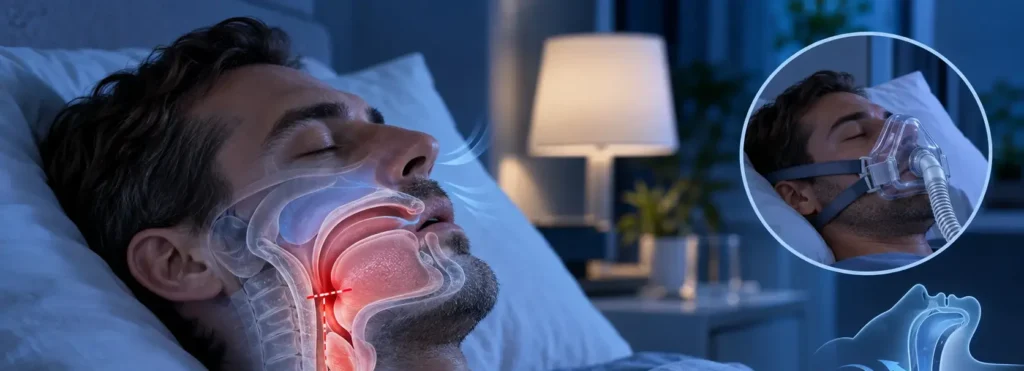
In obstructive sleep apnea (OSA), the upper airway repeatedly narrows or closes during sleep. Breathing may stop or become significantly reduced, oxygen levels can fall, and the brain briefly activates the body to restore airflow. In people with moderate or severe OSA, this cycle may happen many times throughout the night.
Each episode places temporary stress on the cardiovascular system. Over time, repeated oxygen drops, surges in sympathetic nervous system activity, changes in blood pressure, and large shifts in pressure inside the chest may contribute to cardiovascular strain.
Obstructive sleep apnea has been associated with high blood pressure, atrial fibrillation and other arrhythmias, coronary artery disease, heart failure, stroke, and increased cardiovascular risk.
So, can sleep apnea damage your heart?
The relationship is complex, but untreated obstructive sleep apnea can create conditions that place repeated stress on the heart and blood vessels — especially when other cardiovascular risk factors are present.
Key Takeaways
- Sleep apnea can repeatedly lower oxygen levels during sleep
- These episodes can increase blood pressure and stress the cardiovascular system.
- Untreated OSA is associated with arrhythmias, heart failure, stroke and higher cardiovascular risk.
- Effective treatment may reduce cardiovascular strain, especially in people with moderate or severe OSA.
1
Sleep Apnea and Heart Health: What’s the Connection?
To understand the relationship between sleep apnea and heart health, it helps to look at what happens during a single obstructive apnea
Normally, air moves freely through the upper airway while you sleep. In obstructive sleep apnea, the airway collapses or becomes blocked even though the respiratory muscles continue trying to breathe.
A typical sequence may look like this:
Upper airway obstruction → reduced or absent airflow → falling blood oxygen → increasing respiratory effort → brain arousal → airway reopens → breathing resumes
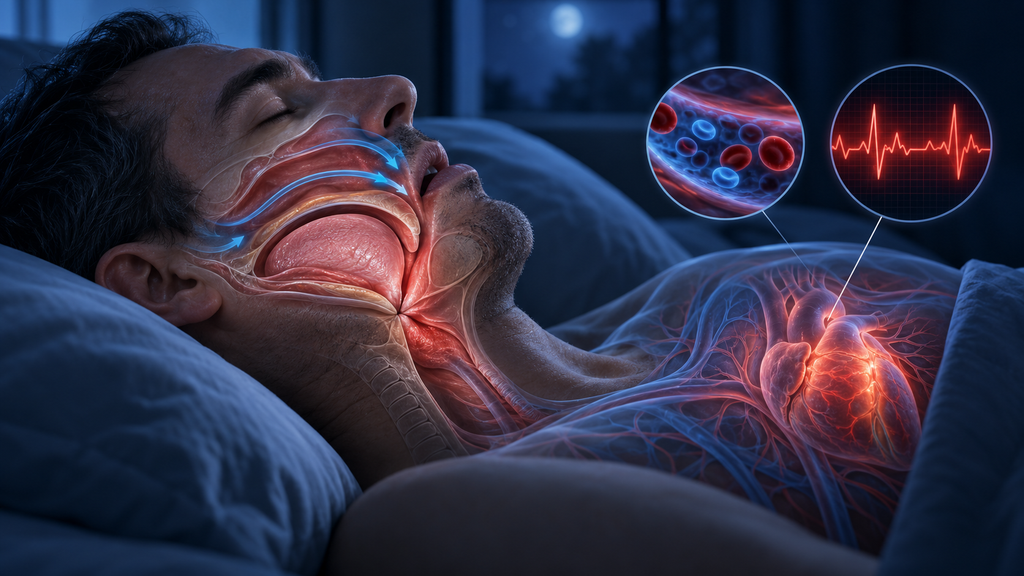
As oxygen levels fall and carbon dioxide rises, the body activates stress responses designed to restore adequate oxygen delivery. Sympathetic nervous system activity increases, producing changes in heart rate and blood pressure.
In someone with significant OSA, this pattern can repeat throughout the night.
Instead of experiencing a long period of cardiovascular rest during sleep, the body is repeatedly exposed to episodes of hypoxemia, arousal, sympathetic activation, and pressure changes.
Over months and years, these repeated physiological stresses may contribute to cardiovascular disease.
2
Sleep Apnea and High Blood Pressure
One of the strongest cardiovascular connections with obstructive sleep apnea involves hypertension.
Blood pressure normally decreases during healthy sleep. This is sometimes called nocturnal “dipping.” Sleep apnea can disrupt this pattern.
Every apnea or hypopnea may trigger sympathetic nervous system activation and temporary increases in blood pressure. Repeated episodes throughout the night can contribute to persistently elevated sympathetic activity and abnormal nighttime blood-pressure patterns.
Over time, OSA has been associated with the development and worsening of hypertension.
The relationship is particularly important in people with resistant hypertension — blood pressure that remains difficult to control despite appropriate treatment. Obstructive sleep apnea is common in this population, which is why evaluation for OSA may be recommended when hypertension is resistant or poorly controlled.
High blood pressure itself is a major cardiovascular risk factor, increasing stress on the arteries and heart over time.
3
Can Sleep Apnea Cause Heart Rhythm Problems?
Sleep apnea is also strongly associated with cardiac arrhythmias, particularly atrial fibrillation.
During an apnea episode, several things happen almost simultaneously:
- oxygen levels fluctuate
- carbon dioxide may rise
- sympathetic and parasympathetic activity can change rapidly
- pressure inside the chest changes
- the heart experiences repeated mechanical and electrical stress
These conditions may create an environment that favors abnormal electrical activity in susceptible individuals.
4
Sleep Apnea and Atrial Fibrillation
Atrial fibrillation (AF) is one of the most studied arrhythmias in relation to OSA.
AF occurs when electrical activity in the upper chambers of the heart becomes disorganized, producing an irregular rhythm.
Obstructive sleep apnea is common among people with AF, and the two conditions share several risk factors, including obesity, hypertension, increasing age, and metabolic disease.
Sleep apnea may also contribute additional physiological stresses that promote structural and electrical changes in the atria.
This does not mean that everyone with sleep apnea will develop atrial fibrillation, or that OSA is the only cause of AF. Rather, OSA is considered an important cardiovascular risk factor and comorbidity.
5
Sleep Apnea, Atherosclerosis, and Coronary Artery Disease
Another concern is the potential relationship between sleep apnea and disease of the arteries supplying the heart.
Repeated intermittent hypoxia and reoxygenation can promote oxidative stress and inflammatory signaling. Sleep apnea is also associated with endothelial dysfunction, sympathetic activation, hypertension, and metabolic abnormalities.
Together, these processes may contribute to an environment that favors vascular disease.
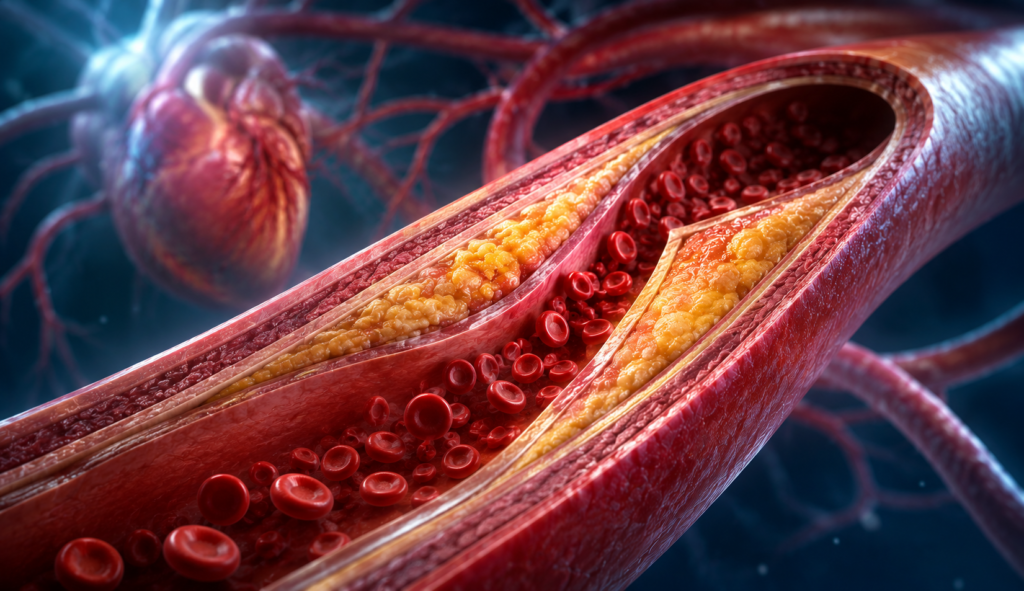
Atherosclerosis develops when atherogenic lipoproteins and inflammatory processes contribute to plaque formation within arterial walls. As plaques grow or become complicated, blood flow through affected arteries can become restricted.
When atherosclerosis affects the coronary arteries, it becomes coronary artery disease (CAD).
The relationship between sleep apnea and heart health is influenced by many factors, including OSA severity and the presence of other cardiovascular risk factors.
Sleep apnea should not be thought of as the sole cause of atherosclerosis. Cardiovascular disease develops through multiple interacting factors, including cholesterol levels, smoking, blood pressure, diabetes, genetics, age, physical activity, and others.
6
Can Sleep Apnea Increase the Risk of a Heart Attack?
Obstructive sleep apnea is associated with coronary artery disease and adverse cardiovascular outcomes, but the relationship between OSA and heart attacks is not as simple as saying that sleep apnea directly causes a myocardial infarction.
A heart attack most commonly occurs when an atherosclerotic plaque in a coronary artery becomes disrupted and a blood clot forms, suddenly reducing or blocking blood flow to part of the heart muscle.
Sleep apnea may contribute indirectly to cardiovascular risk through several pathways, including:
intermittent hypoxia → sympathetic activation → elevated blood pressure → oxidative stress and inflammation → vascular dysfunction
These effects occur alongside traditional cardiovascular risk factors.
This is why cardiovascular risk should be evaluated as a whole rather than focusing on a single condition.
7
Sleep Apnea and Heart Failure
The relationship between sleep-disordered breathing and heart failure is particularly important — and it can work in both directions.
Obstructive sleep apnea can expose the heart to repeated changes in blood pressure, oxygen levels, sympathetic activity, and intrathoracic pressure.
When someone tries to breathe against a closed upper airway, the resulting negative pressure inside the chest can increase the mechanical load on the heart.
Over time, these stresses may be particularly relevant in people who already have impaired cardiac function.
However, heart failure is also associated with another form of sleep-disordered breathing called central sleep apnea (CSA).
Unlike OSA, where airflow stops because the upper airway becomes physically obstructed, central sleep apnea occurs when respiratory drive temporarily decreases or stops.
Therefore, sleep-disordered breathing in a patient with heart failure requires proper medical assessment rather than assuming that every apnea is obstructive.
8
What About Stroke?
The cardiovascular effects of sleep apnea extend beyond the heart.
OSA is also associated with an increased risk of stroke.
Several mechanisms may contribute, including hypertension, vascular dysfunction, metabolic abnormalities, inflammation, and the association between OSA and atrial fibrillation.
Atrial fibrillation itself is an important risk factor for ischemic stroke because blood can stagnate within parts of the atria, allowing a clot to form and potentially travel to the brain.
Again, association does not mean that every person with OSA will experience a stroke. Individual risk depends on many factors.
9
Can Sleep Apnea Cause Sudden Cardiac Arrest?
This question requires careful distinction between association and direct causation.
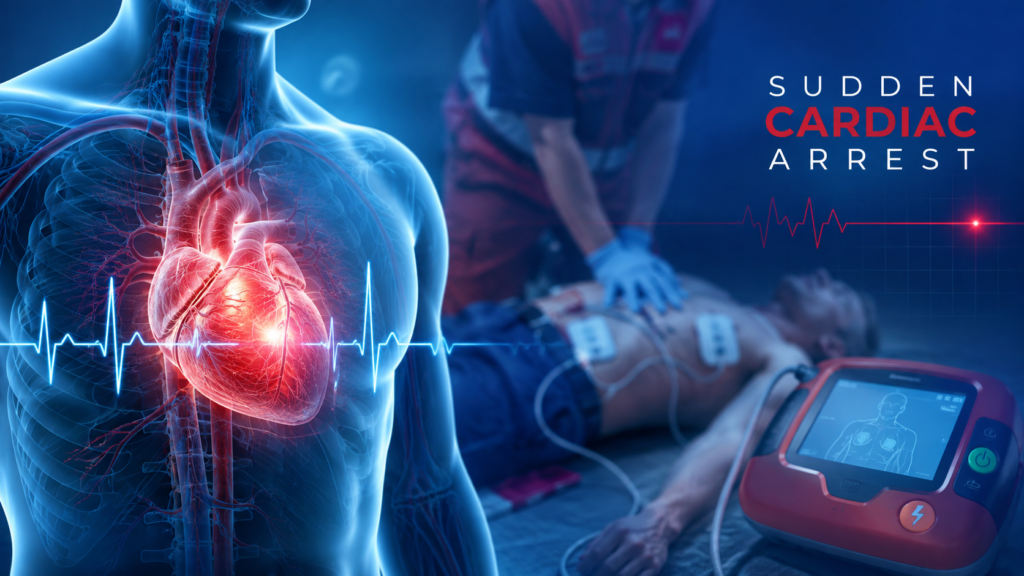
Sudden cardiac arrest occurs when the heart suddenly becomes unable to maintain effective circulation, usually because of a severe electrical disturbance such as ventricular fibrillation or ventricular tachycardia.
Obstructive sleep apnea has been associated with arrhythmias and cardiovascular disease, and nighttime physiological stress may be particularly relevant in people who already have underlying heart disease.
However, it would be inaccurate to say that sleep apnea inevitably or directly causes sudden cardiac arrest.
People with significant sleep apnea and known cardiovascular disease should therefore have both conditions appropriately evaluated and managed.
10
Does Treating Sleep Apnea Protect Your Heart?
Treating obstructive sleep apnea has clear benefits, but cardiovascular protection needs to be described carefully. When considering sleep apnea and heart health, treatment should be viewed as part of a broader cardiovascular risk-management strategy.
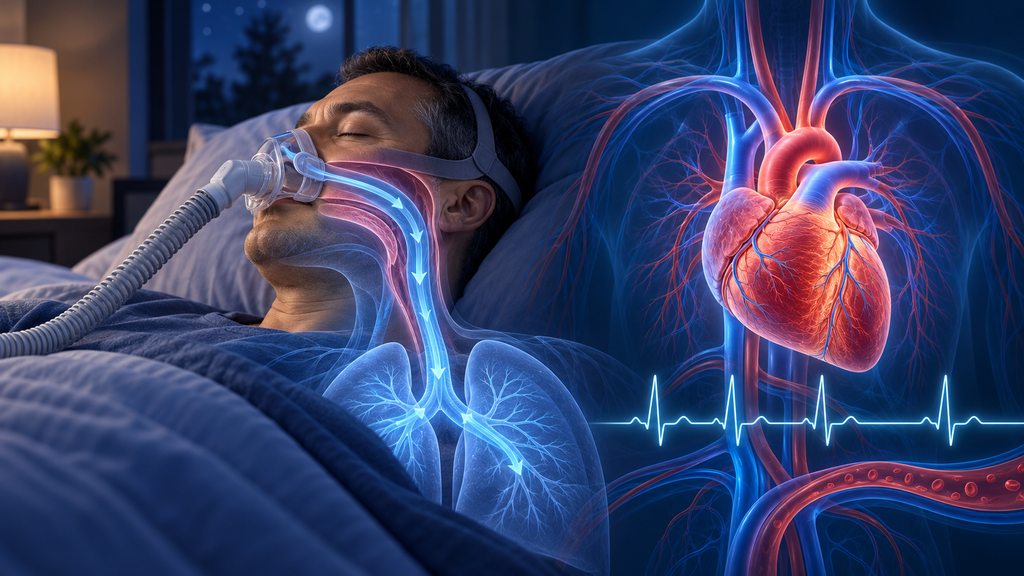
Continuous positive airway pressure (CPAP) is a standard treatment for many people with moderate-to-severe OSA. CPAP therapy helps keep the airway open during sleep, reducing repeated oxygen drops and nighttime cardiovascular stress while supporting more stable breathing and heart function.
Effective CPAP treatment can reduce obstructive respiratory events and improve symptoms such as snoring and excessive daytime sleepiness. It can also produce modest improvements in blood pressure, particularly in some patients with hypertension.
However, it should not be claimed that CPAP has been proven to prevent every heart attack, stroke, or other major cardiovascular event.
Large randomized trials in people with established cardiovascular disease have not consistently demonstrated that CPAP alone reduces major cardiovascular events.
Sleep apnea treatment should be individualized and may include:
- CPAP or other positive airway pressure therapy
- weight management when appropriate
- regular physical activity
- avoiding excessive alcohol, particularly before sleep
- positional therapy in selected patients
- oral appliances in appropriate cases
- evaluation of upper-airway anatomy when indicated
- management of accompanying hypertension, diabetes, abnormal cholesterol, and other cardiovascular risk factors
The goal is to treat sleep apnea while also addressing the person’s overall cardiovascular health.
11
When Should You Talk to a Doctor?
Sleep apnea is frequently undiagnosed.
Medical evaluation may be appropriate if you or someone sleeping near you notices:
- loud, persistent snoring
- repeated pauses in breathing during sleep
- gasping or choking during sleep
- excessive daytime sleepiness
- morning headaches
- difficulty concentrating
- unrefreshing sleep
The threshold for evaluation may be particularly important when these symptoms occur alongside cardiovascular conditions such as resistant hypertension, recurrent atrial fibrillation, coronary artery disease, heart failure, or previous stroke.
A sleep study can help determine whether sleep apnea is present and how severe it is.
For a complete explanation of the different types of sleep apnea, symptoms, diagnosis, sleep studies, AHI, CPAP, and treatment options, read our Sleep Apnea guide.
12
The Bottom Line
Sleep apnea is much more than a nighttime breathing problem. The connection between sleep apnea and heart health extends beyond nighttime breathing disturbances
In obstructive sleep apnea, repeated airway obstruction exposes the cardiovascular system to cycles of low oxygen, sleep disruption, sympathetic nervous system activation, blood-pressure changes, and abnormal pressure inside the chest.
Over time, OSA is associated with several important cardiovascular conditions, including hypertension, atrial fibrillation, coronary artery disease, heart failure, and stroke.
The level of risk varies considerably from person to person, and sleep apnea should not be viewed as the sole cause of cardiovascular disease.
But when OSA is present — particularly alongside other cardiovascular risk factors — recognizing and appropriately treating it can be an important part of protecting overall health.
Frequently Asked Questions
Can sleep apnea damage your heart?
Sleep apnea can repeatedly stress the cardiovascular system through intermittent hypoxia, sympathetic activation, blood-pressure changes, and intrathoracic pressure swings. OSA is associated with heart failure and other cardiovascular conditions, although individual risk varies.
Can sleep apnea cause high blood pressure?
Obstructive sleep apnea is strongly associated with hypertension. Repeated apnea episodes can activate the sympathetic nervous system and produce recurrent nighttime blood-pressure surges. OSA is particularly common in people with resistant hypertension.
Can sleep apnea cause an irregular heartbeat?
OSA is associated with several cardiac arrhythmias, particularly atrial fibrillation. However, sleep apnea is one of multiple factors that can contribute to arrhythmia risk.
Can sleep apnea cause a heart attack?
Sleep apnea is associated with coronary artery disease and increased cardiovascular risk, but it is inaccurate to describe OSA as a simple direct cause of every heart attack. Heart attacks are usually related to coronary atherosclerosis and acute clot formation, with multiple risk factors contributing.
Can CPAP improve heart health?
CPAP effectively treats obstructive breathing events and can improve sleep-apnea symptoms and modestly lower blood pressure in some patients. However, large randomized trials have not consistently shown that CPAP alone prevents major cardiovascular events in people with established cardiovascular disease.
Should people with heart problems be checked for sleep apnea?
In selected cardiovascular populations, screening or formal sleep assessment may be appropriate. The American Heart Association specifically highlights groups such as people with resistant or poorly controlled hypertension, recurrent atrial fibrillation, pulmonary hypertension, and certain patients with heart failure when sleep-disordered breathing is suspected.
Sources
- American Heart Association (AHA). Sleep apnea and cardiovascular disease: information on the relationship between obstructive sleep apnea, hypertension, arrhythmias, stroke, and heart failure.
- American Academy of Sleep Medicine (AASM). Clinical guidance and educational resources on obstructive sleep apnea, diagnosis, treatment, and cardiovascular risk.
- National Heart, Lung, and Blood Institute (NHLBI). Sleep apnea overview, symptoms, health effects, diagnosis, and treatment.
- Centers for Disease Control and Prevention (CDC). Information on sleep disorders, cardiovascular risk factors, high blood pressure, and stroke prevention.
- Mayo Clinic. Obstructive sleep apnea: symptoms, causes, complications, diagnosis, and treatment.
- European Society of Cardiology (ESC). Clinical guidance on cardiovascular risk, hypertension, atrial fibrillation, and sleep-disordered breathing.
- Javaheri S, Barbe F, Campos-Rodriguez F, et al. Sleep apnea: types, mechanisms, and clinical cardiovascular consequences. Journal of the American College of Cardiology.
- Drager LF, McEvoy RD, Barbe F, Lorenzi-Filho G, Redline S. Sleep apnea and cardiovascular disease: lessons from recent trials and the need for team science. Circulation.
Medical Disclaimer: This article is for educational purposes only and is not a substitute for professional medical advice, diagnosis, or treatment. If you have symptoms of sleep apnea or cardiovascular disease, speak with a qualified healthcare professional.