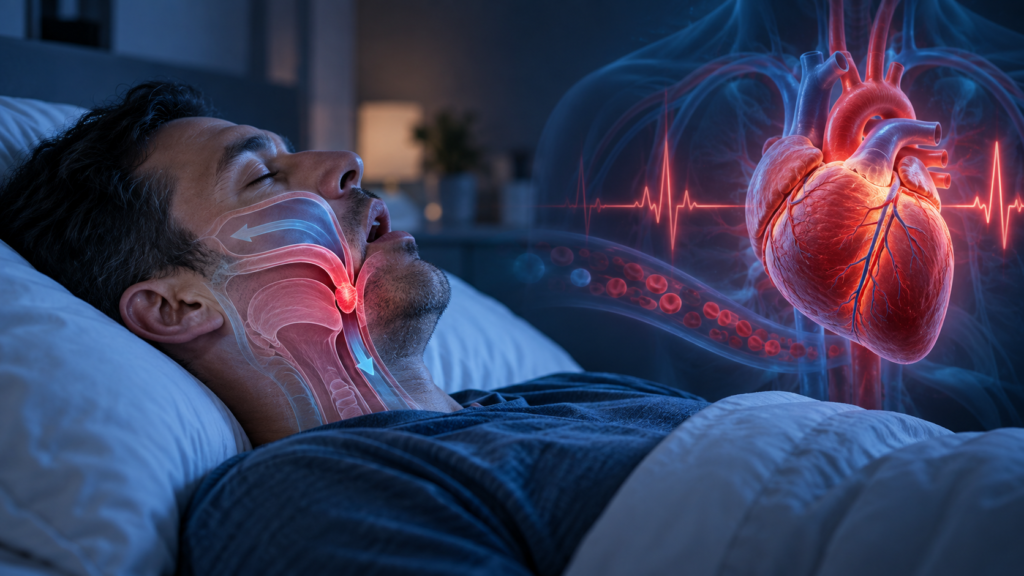
Heart rate explained: Your pulse is more than just a number. It provides valuable insights into how your body responds to exercise, stress, recovery, and overall cardiovascular health. Understanding your heart rate can help you recognize important changes in your body and make informed decisions about your health.
Understanding your pulse can help you recognize changes in your fitness level, monitor your recovery, and better understand how your cardiovascular system works.
In this guide, we will explain what heart rate means, what normal values look like, why athletes often have lower resting heart rates, and what your pulse can reveal about your health.
What Is Heart Rate?
Heart rate is the number of times your heart beats in one minute, measured as beats per minute (BPM). For example, if your heart rate is 70 BPM, your heart contracts approximately 70 times every minute.
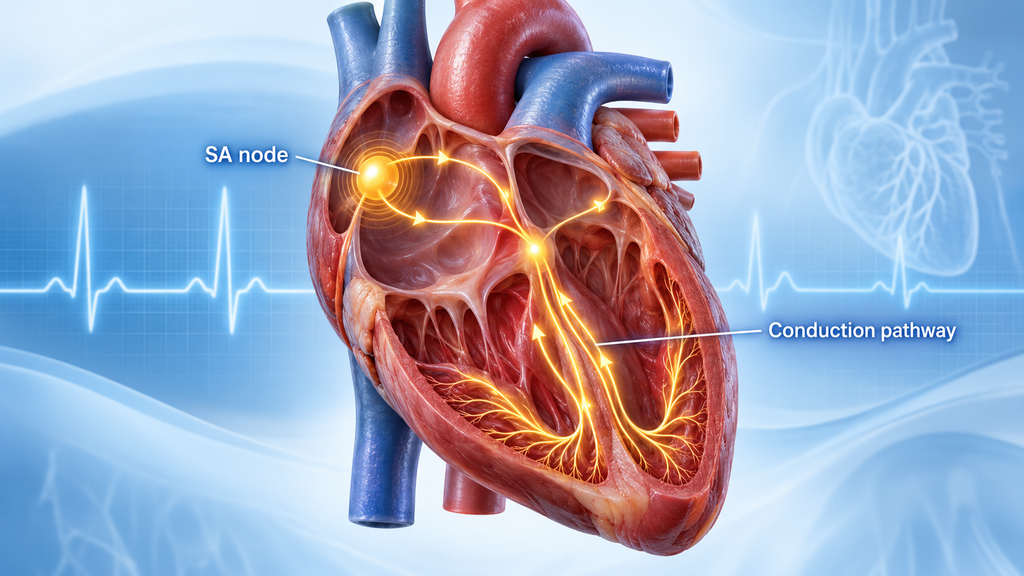
Every heartbeat is controlled by the heart’s electrical system. The process begins in the sinoatrial (SA) node, often called the heart’s natural pacemaker. The electrical signal travels through the heart, causing the atria and ventricles to contract and pump blood throughout the body.
Your heart rate changes constantly depending on your body’s needs. During exercise, your muscles require more oxygen, so your heart beats faster.
During sleep and rest, your heart rate usually decreases because your body requires less energy.
Heart Rate vs Pulse: What Is the Difference?
Although the terms are often used interchangeably, heart rate and pulse are slightly different.
Heart rate refers to how often your heart contracts.
Pulse refers to the pressure wave created when your heart pumps blood through your arteries.
In most healthy people, these values are the same. However, certain heart rhythm problems can cause differences between the heart rate and the pulse you feel.
What Is a Normal Resting Heart Rate?
Resting heart rate is your pulse when your body is relaxed and not affected by exercise, stress, caffeine, or other temporary factors.
For most adults:
- 60–100 BPM is considered a normal resting heart rate.
- 40–60 BPM may be normal in well-trained athletes or highly active individuals.
- Heart rate is often lower during sleep.
However, the number alone does not define cardiovascular health. A healthy heart rate depends on many factors, including age, fitness level, medications, stress, and medical conditions.
A resting heart rate that is normal for one person may not be normal for another.
Why Do Athletes Have Lower Heart Rates?
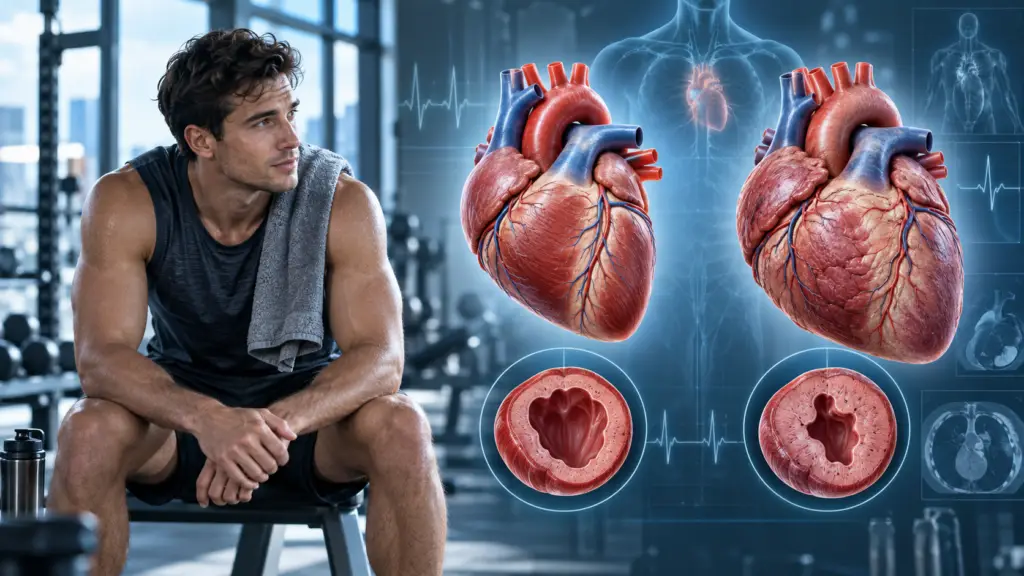
Many endurance athletes have resting heart rates below 60 BPM. This is often a result of the heart adapting to regular physical training.
Exercise can improve:
- Heart muscle efficiency
- Stroke volume (the amount of blood pumped with each heartbeat)
- Oxygen delivery
- Nervous system regulation
Because the heart becomes more efficient, it may not need to beat as frequently to deliver the same amount of blood.
For example, an athlete with a resting heart rate of 50 BPM may have a stronger cardiovascular system than someone with a resting heart rate of 80 BPM.
While regular exercise improves cardiovascular efficiency, a lower resting heart rate does not always guarantee a healthy heart. Learn more about whether a strong heart is always a healthy heart.
However, a low heart rate is not automatically a sign of excellent health. Symptoms such as dizziness, fainting, unusual fatigue, or chest discomfort should always be evaluated by a healthcare professional.
Heart Rate Explained: What Changes in Your Pulse Mean
Your pulse can provide important information about your body’s current state.
1. Fitness Level and Exercise Adaptation
Resting heart rate is often used as one indicator of cardiovascular fitness.
When your fitness improves, your heart may become more efficient, which can result in:
- Lower resting heart rate
- Faster recovery after exercise
- Better exercise tolerance
Many athletes also track how quickly their heart rate returns to normal after training, known as heart rate recovery.
A faster recovery can indicate better cardiovascular conditioning.
2. Stress and Recovery
Your heart rate is influenced by your nervous system.
When your body experiences stress, the sympathetic nervous system activates the “fight or flight” response. This can increase:
- Heart rate
- Blood pressure
- Breathing rate
Poor sleep, emotional stress, intense training, and insufficient recovery can all affect your resting heart rate. Poor sleep can affect your resting heart rate and cardiovascular recovery. Conditions such as sleep apnea may place additional stress on your cardiovascular system. Discover how sleep apnea can affect your heart.
Tracking changes over time can help you understand when your body may need more rest.
3. Illness and Physical Stress
Your heart rate may increase when your body is fighting an infection or experiencing physical stress.
Common causes of temporarily increased heart rate include:
- Fever
- Dehydration
- Lack of sleep
- Pain
- Inflammation
- Intense exercise
A higher pulse during illness is often part of the body’s normal response because the cardiovascular system works harder to support recovery.
4. Cardiovascular Health
Heart rate can also provide clues about cardiovascular function.
Persistent changes, especially when combined with symptoms, may require medical evaluation.
Examples include:
- A consistently elevated resting heart rate
- Irregular heartbeat sensations
- Reduced exercise capacity
- Unexplained fatigue
It is important to remember that heart rate is only one part of cardiovascular assessment. Blood pressure, cholesterol levels, lifestyle factors, and medical history are also important.
High Heart Rate: When Should You Be Concerned?
A resting heart rate above 100 BPM is generally considered tachycardia.
A temporarily elevated heart rate can happen for many harmless reasons, including:
- Exercise
- Caffeine
- Stress
- Anxiety
- Dehydration
However, a persistently high resting heart rate or a rapid heartbeat accompanied by symptoms may require medical attention.
Warning signs may include:
- Chest pain
- Shortness of breath
- Fainting
- Severe dizziness
- New irregular heartbeat sensations
Low Heart Rate: Is It Always Healthy?
A resting heart rate below 60 BPM is called bradycardia.
In some people, especially athletes, this can be completely normal.
However, a low heart rate may become concerning if it causes symptoms such as:
- Weakness
- Dizziness
- Fainting
- Extreme tiredness
The most important factor is not only the number but how you feel and whether your heart is functioning properly.
Heart Rate During Exercise: Understanding Training Zones
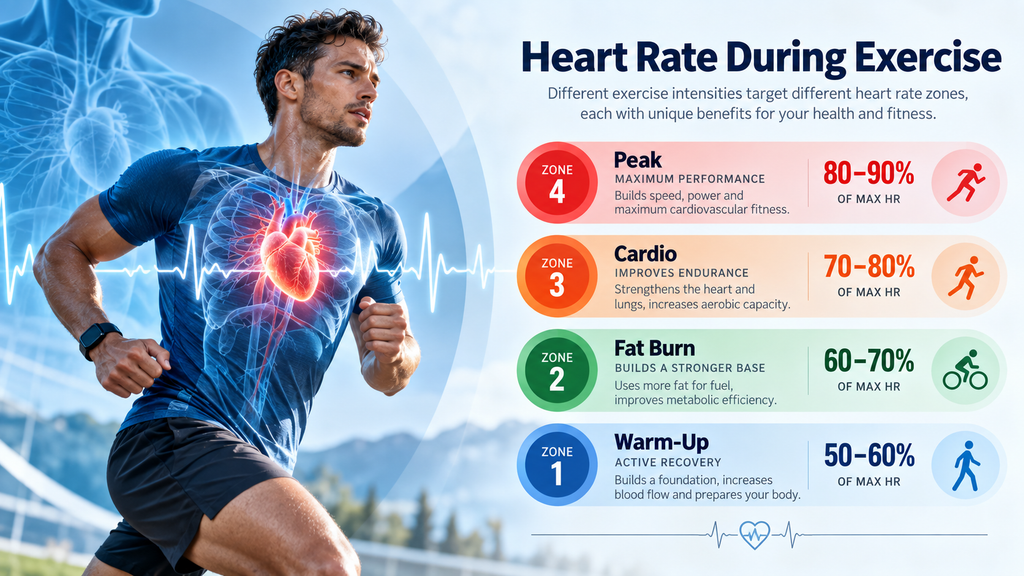
During physical activity, your heart rate increases to supply muscles with more oxygen. With heart rate explained through different training zones, you can better understand how your cardiovascular system responds to exercise.
Many athletes use heart rate zones to control training intensity.
Different training zones produce different adaptations, from improving endurance to increasing performance capacity.
How Smart Watches Measure Heart Rate
Modern fitness watches can continuously monitor heart rate using a technology called photoplethysmography (PPG).
These sensors use small LED lights to detect changes in blood flow beneath the skin.
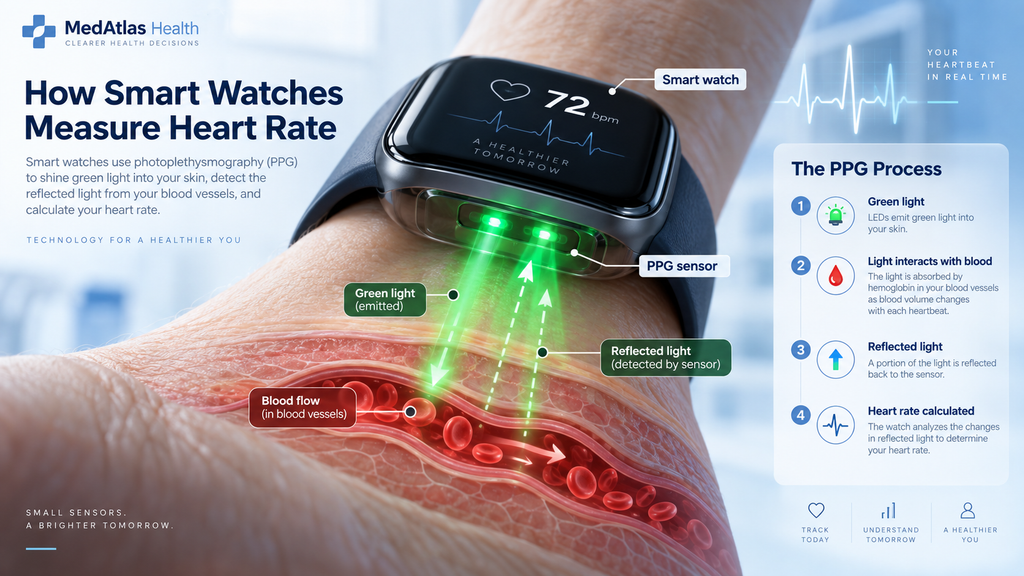
Smart watches can be useful for:
- Tracking exercise intensity
- Monitoring daily activity
- Observing trends over time
- Measuring recovery
However, they are not replacements for medical equipment. Results can sometimes be affected by movement, poor skin contact, or device limitations.
What Is Heart Rate Variability (HRV)?
Heart rate variability (HRV) refers to the variation in time between individual heartbeats.
A healthy heart does not beat like a perfectly timed clock. Small differences between beats are normal and influenced by the autonomic nervous system.
HRV can be affected by:
- Sleep quality
- Stress
- Training load
- Recovery
- Illness
Many fitness devices now include HRV measurements to help users understand recovery and stress patterns.
How to Measure Your Heart Rate Correctly
For the most accurate resting heart rate measurement:
- Measure it after waking up
- Stay relaxed for several minutes
- Avoid caffeine before measurement
- Measure under similar conditions each day
Tracking trends over weeks and months is usually more useful than focusing on a single measurement.
5 Factors That Can Temporarily Increase Your Heart Rate
Your pulse naturally changes throughout the day.
Common factors that increase heart rate include:
Caffeine
Coffee and energy drinks can temporarily stimulate the nervous system and increase heart rate.
Exercise
Physical activity increases oxygen demand, requiring faster heart pumping.
Stress
Emotional stress activates the sympathetic nervous system.
Dehydration
Lower blood volume can make the heart beat faster to maintain circulation.
Poor Sleep
Insufficient sleep can affect stress hormones and cardiovascular regulation.
Can You Improve Your Resting Heart Rate?
A healthier cardiovascular system is influenced by daily habits.
Helpful strategies include:
- Regular aerobic exercise
- Strength training
- Maintaining a healthy body weight
- Quality sleep
- Proper hydration
- Managing stress
- Avoiding smoking
The goal is not simply achieving the lowest possible heart rate, but improving overall cardiovascular function.
Regular physical activity can improve cardiovascular fitness, but proper technique and recovery are equally important. Understanding common gym injuries and how to prevent them can help you maintain a safe and consistent training routine.
Final Thoughts
Your heart rate is a simple measurement that provides valuable insight into how your body is functioning.
A single number cannot define your health, but changes in your pulse over time can reveal important information about fitness, recovery, stress, and cardiovascular function.
By understanding your heart rate and the factors that influence it, you can make better decisions about training, recovery, and long-term heart health.
With heart rate explained, you can focus on meaningful trends rather than individual measurements.
Frequently Asked Questions
What is a healthy resting heart rate?
For most adults, a resting heart rate between 60 and 100 BPM is considered normal. Individual factors such as fitness level and health condition should also be considered.
Is a resting heart rate of 50 BPM healthy?
It can be normal, especially in trained athletes. If it is accompanied by symptoms such as dizziness or fainting, medical evaluation may be needed.
Can stress increase heart rate?
Yes. Stress activates the sympathetic nervous system, which can increase heart rate and blood pressure.
What heart rate is dangerous?
There is no single dangerous number for everyone. Persistent very high or very low heart rates, especially with symptoms, should be evaluated by a healthcare professional.
Are smart watches accurate for heart rate monitoring?
Smart watches can provide useful estimates and track trends, but they are not a replacement for clinical medical devices.
Sources
- American Heart Association (AHA)
- European Society of Cardiology (ESC)
- Centers for Disease Control and Prevention (CDC)
- National Heart, Lung, and Blood Institute (NHLBI)
- Mayo Clinic