Introduction
How the brain processes pain is more complex than it may seem. You can touch something hot, injure a muscle, or develop a headache — and feel pain almost immediately.
But pain is far more complex than a direct signal traveling from an injured body part to the brain.
What we experience as pain is created through a sophisticated interaction between sensory nerves, the spinal cord, the brain, emotions, attention, memory, and previous experiences. This is why two people with similar injuries may experience very different levels of pain — and why pain can sometimes continue even after damaged tissue has healed.
Understanding how the brain processes pain helps explain why pain is not simply a measure of physical damage.
What Is Pain?
Pain is the body’s way of warning us that something may be wrong.
It can appear after an injury, during inflammation, or because of illness. But the amount of pain we feel does not always match the amount of physical damage.
The body first detects a potentially harmful stimulus, such as extreme heat, pressure, or injury. These signals then travel through the nervous system and are interpreted by the brain.
Only after this processing do we consciously experience pain.
This means that pain is not simply produced at the site of an injury. It is created through communication between the body and the brain.
How Does Pain Begin?
Special nerve endings throughout the body constantly monitor for possible danger.
They can react to:
- extreme heat or cold
- strong pressure
- cuts or injuries
- inflammation
- irritation inside muscles, joints, or organs
For example, if you touch a hot surface, nerves in your skin quickly detect the dangerous temperature.
They then send electrical signals toward the spinal cord and brain.
This process happens in a fraction of a second.
Pain Signals Travel Through the Nerves
Once a potentially harmful stimulus is detected, the signal travels through sensory nerves.
Some signals travel very quickly, while others move more slowly.
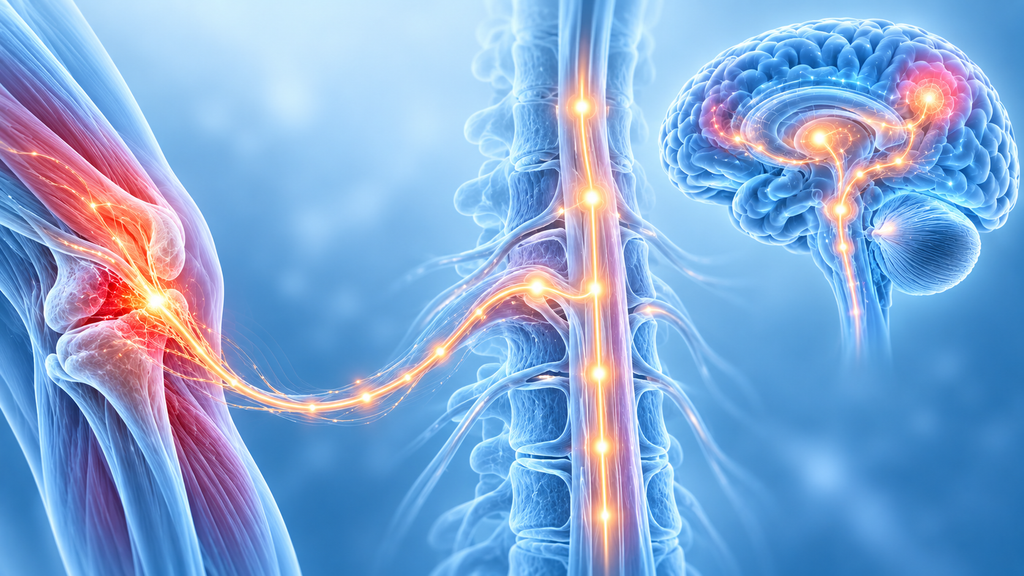
Pain signals travel from injured or irritated tissues through peripheral nerves to the spinal cord and then to the brain, where they are processed and experienced as pain. This can explain why some injuries first cause a sharp, sudden pain and are then followed by a deeper, aching sensation.
The nerves carry information about what is happening in the body, but they do not decide how much pain you will feel. That depends on how the nervous system and brain interpret the information.
The Spinal Cord Does More Than Pass Signals Along
Pain-related signals travel through the spinal cord before reaching the brain.
The spinal cord is not simply a cable that transfers information.
It can change how strongly some signals are passed on.
In some situations, the spinal cord can also trigger a protective reflex before you are fully aware of the pain.
For example, if you touch a very hot object, your hand may pull away before you consciously realize how hot it was.
This rapid reaction helps protect the body from further injury.
How the Brain Processes Pain
When signals reach the brain, several areas work together to understand what is happening.
There is no single “pain center” in the brain.
Instead, different parts of the brain help answer different questions:
- Where is the pain?
- How strong is it?
- Is it sharp, burning, aching, or throbbing?
- Is the situation dangerous?
- How unpleasant or frightening does it feel?
- Should you stop what you are doing?
The brain combines all of this information into the experience we call pain.
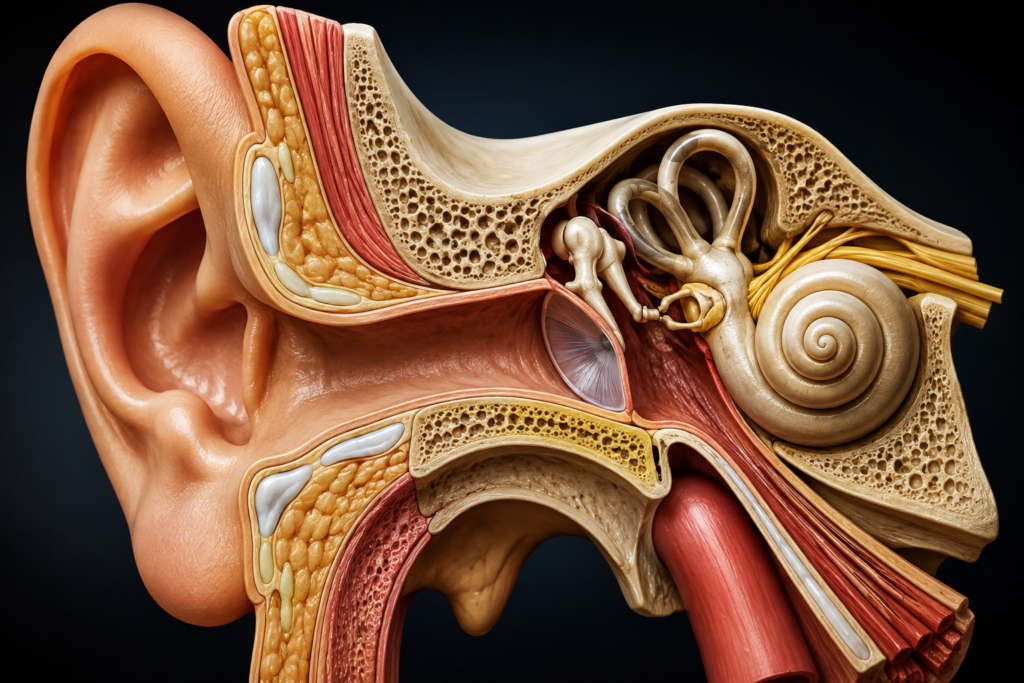
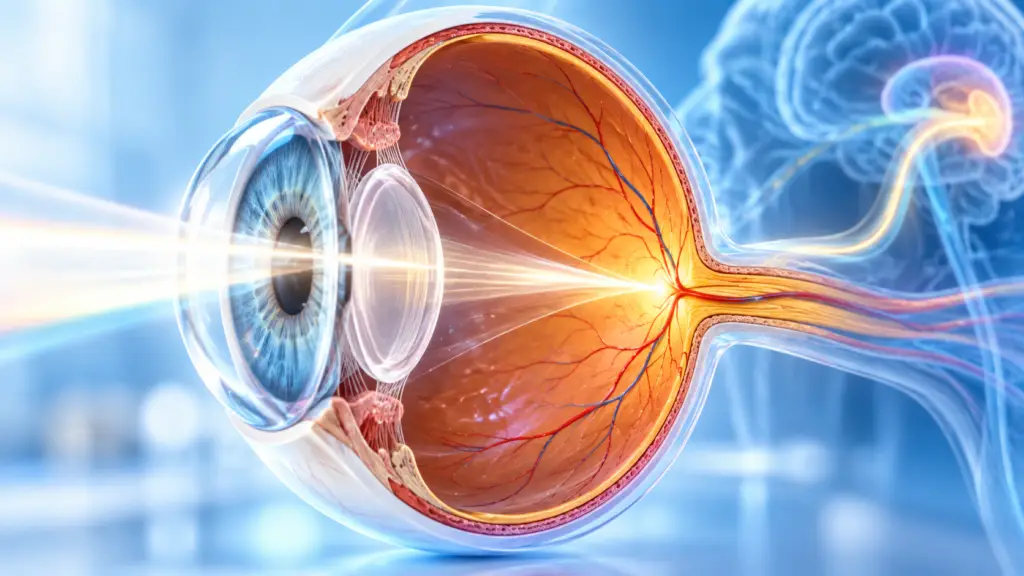
The brain also processes other sensory information in complex ways, including how we see and hear the world around us.
This is one reason pain can feel different depending on the situation.
Why Emotions Can Change Pain
Pain is closely connected to emotion.
Fear, anxiety, stress, and worry can make pain feel stronger in some situations.
Excitement, focus, or a sudden emergency can sometimes make pain feel less noticeable for a short time.
Imagine injuring your ankle during an important sports match.
You may continue playing because your attention is focused on the game.
Later, once the match is over, the pain may suddenly feel much stronger.
The injury did not necessarily become worse during that time.
Your brain simply began paying more attention to the signals coming from your ankle.
This does not mean the pain is “in your head.”
It means the brain plays an important role in deciding how strongly pain is experienced.
Attention Can Make Pain Feel Stronger or Weaker
The brain constantly receives information from the body.
It cannot focus on everything at the same time.
When you pay close attention to pain, it may become more noticeable.
When your attention is strongly focused on something else, the pain may temporarily feel less intense.
This is why distraction can sometimes help during minor medical procedures, injections, or short-lasting pain.
The pain has not disappeared.
The brain is simply giving it less attention.
The Brain Can Turn Pain Up or Down
Pain signals do not travel in only one direction.
The brain can also send signals back toward the spinal cord.
These signals can increase or reduce how strongly pain-related information is passed through the nervous system.
In simple terms, the nervous system has something similar to a volume control. Sometimes it turns pain down.
For example, during an emergency, the body may temporarily reduce pain so that a person can escape danger.
At other times, the nervous system may increase sensitivity around an injured area to prevent further damage.
This is one reason an injured body part may become especially sensitive for several days.
Acute Pain: A Useful Warning System
Short-term pain usually has an important protective purpose.
A burn tells you to move away from heat.
A painful ankle encourages you to avoid putting too much weight on an injury.
Severe abdominal pain may warn you that something inside the body requires medical attention.
In many cases, pain decreases as the body heals.
However, pain does not always behave this way.
Sometimes it continues long after the original injury.
Why Can Pain Become Chronic?
Chronic pain is pain that continues for a long period of time.
It is not always caused by ongoing tissue damage.
In some people, the nervous system gradually becomes more sensitive.
Signals that were once mild may begin to feel stronger.
The brain and spinal cord may also become more responsive to signals coming from the body.
This can make the nervous system behave as if the danger is still present, even when the original injury has improved.
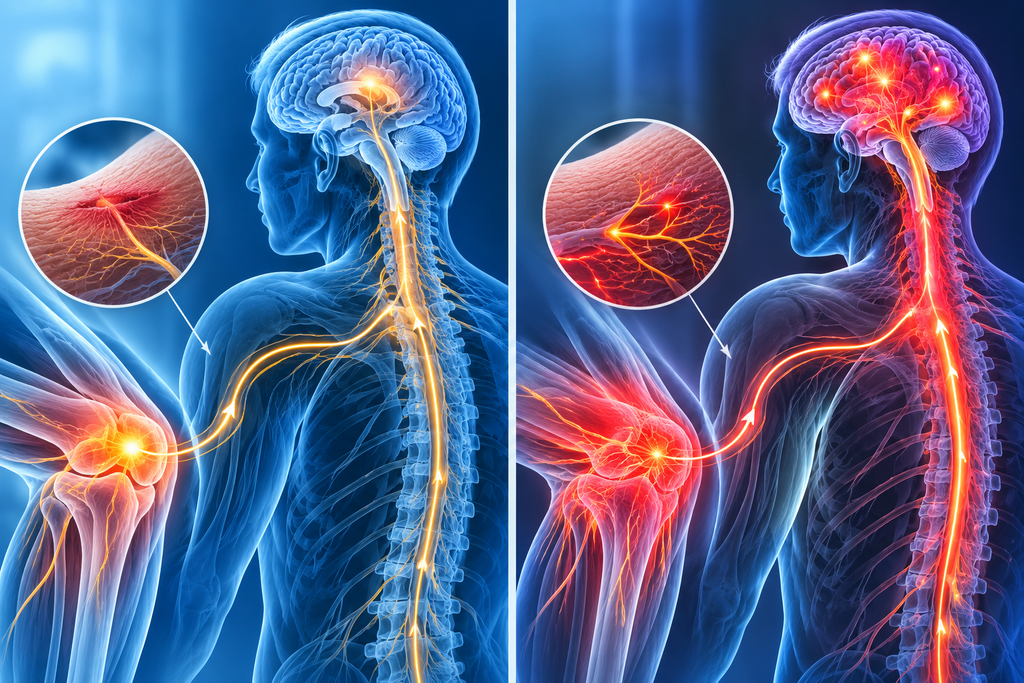
In persistent pain, the nervous system can become more sensitive over time.
This means signals that were once mild may begin to feel stronger, and the brain may react as if the body is still under threat.
As a result, pain can continue even after the original injury has improved or healed.
This is why chronic pain is often more complex than a simple sign of tissue damage.
Can Pain Continue After an Injury Has Healed?
Yes.
Pain can sometimes continue even when the original injury has healed.
This may happen when nerves become damaged or when the nervous system remains unusually sensitive.
One of the clearest examples is phantom limb pain.
Some people who have had an arm or leg amputated may still feel pain in the missing limb.
The limb is no longer there, but the parts of the nervous system and brain that once processed signals from it are still active.
This shows that pain is not simply created in the injured body part.
The brain plays a central role in how pain is experienced.
Why Does Everyone Experience Pain Differently?
Pain is highly personal. Two people with similar injuries may describe very different levels of discomfort.
Many factors can influence pain, including:
- the type of injury
- previous experiences with pain
- stress and anxiety
- fear
- sleep quality
- attention
- mood
- expectations
- overall health
This does not mean that one person’s pain is more real than another’s.
It simply shows that pain is influenced by much more than physical damage alone.
Why Pain Is More Than Just a Sensation
Pain begins when the body detects a possible threat.
Nerves carry this information to the spinal cord and brain.
The brain then combines the physical signals with emotions, attention, memories, and the situation around you.
The final result is the experience of pain.
This is why pain can be sharp or dull, mild or severe, temporary or long-lasting.
It is also why pain can sometimes continue even when the body has already healed.
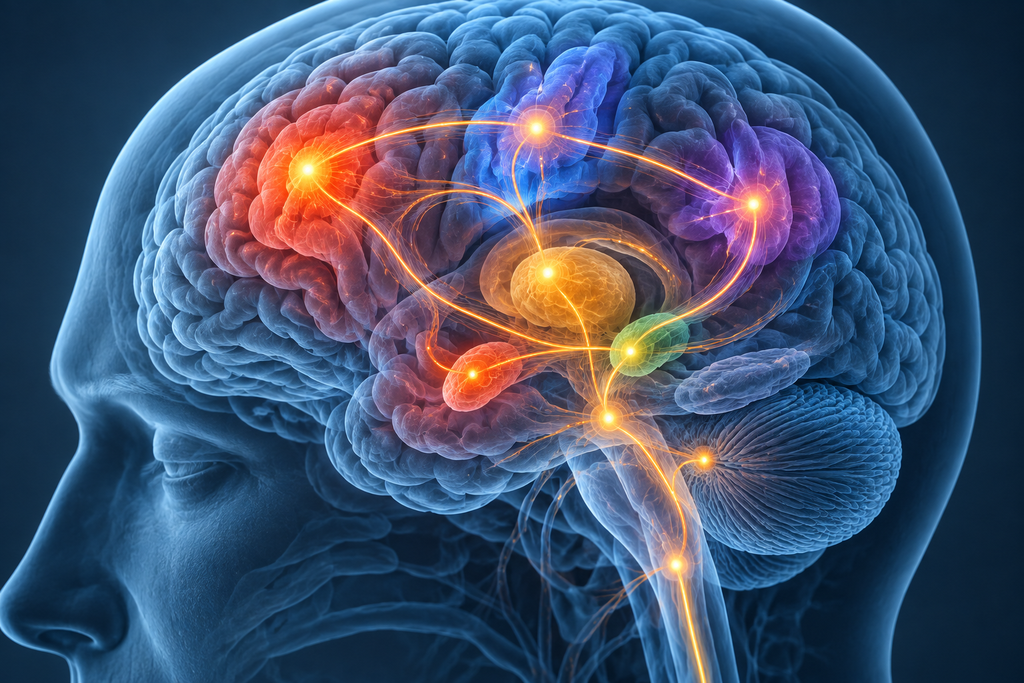
Pain is processed by a network of brain regions that work together to interpret where pain is coming from, how intense it feels, and how much attention and emotion are attached to it.
This helps explain why the same injury can feel different in different situations — and why persistent pain can sometimes continue even after the original tissue damage has healed.
Learning how the brain processes pain also helps explain why pain can sometimes continue after an injury has healed.
Frequently Asked Questions
Is pain created in the brain?
The brain is essential for the conscious experience of pain. Signals may begin in the body, but the brain interprets them and creates the final experience.
Can you have pain without an injury?
Yes. Pain can sometimes occur because of nerve damage or changes in the nervous system even when there is no ongoing tissue injury.
Why does stress make pain worse?
Stress can increase muscle tension, affect sleep, increase anxiety, and make the brain pay more attention to uncomfortable sensations. This can make pain feel stronger.
Why does distraction sometimes reduce pain?
When your attention is focused on something else, the brain may give less priority to pain-related signals, making them feel less intense.
Why can chronic pain continue after healing?
In some people, the nervous system becomes unusually sensitive. This can allow pain to continue even when the original injury has improved.
Medical Disclaimer
The information in this article is intended for educational and informational purposes only and does not replace professional medical advice, diagnosis, or treatment.
Persistent, severe, unexplained, or worsening pain should be evaluated by a qualified healthcare professional.
Sources
- International Association for the Study of Pain — Definition of Pain
- National Institute of Neurological Disorders and Stroke — Pain and the Nervous System
- National Institutes of Health — Pain Research and Chronic Pain
- Nature Reviews Neuroscience — Brain Networks Involved in Pain
- Nature Reviews Neuroscience — Nervous System Changes in Chronic Pain