
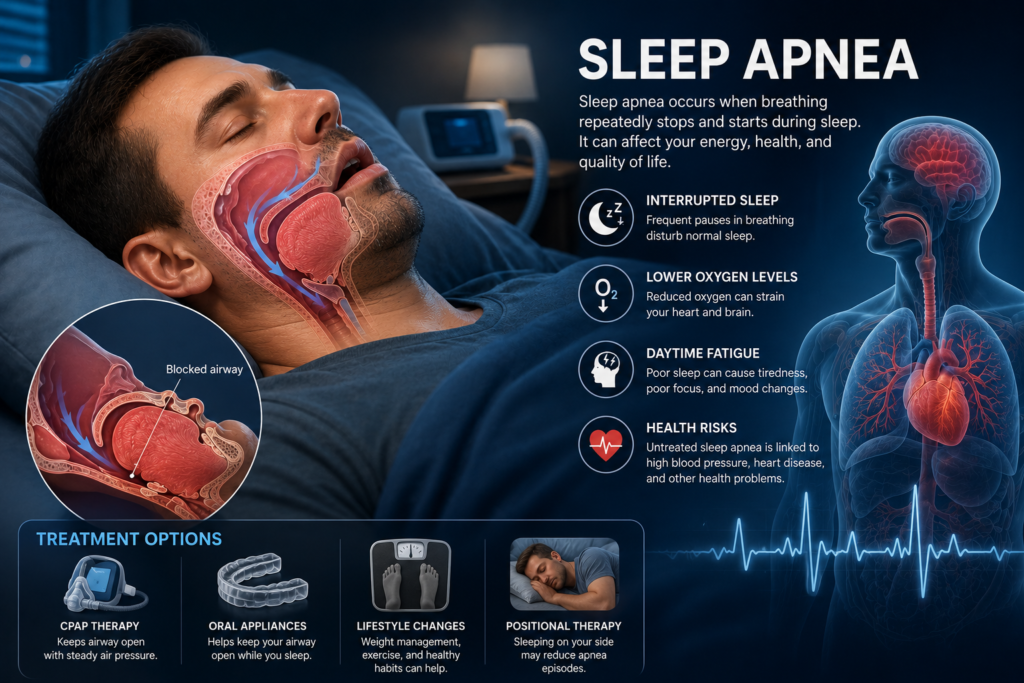
Sleep apnea is a common sleep disorder in which breathing repeatedly stops or becomes reduced during sleep. These interruptions can occur many times throughout the night, sometimes without the person realizing it.
Although this sleep disorder is often associated with loud snoring, it is more than just a sleep problem. Repeated interruptions in breathing can reduce oxygen levels and repeatedly disturb normal sleep. Over time, untreated disorder can affect daytime alertness, concentration, cardiovascular health, and overall quality of life..
What Is Sleep Apnea?
The word apnea means a temporary pause in breathing.
According to the National Heart, Lung, and Blood Institute (NHLBI), sleep apnea is a common condition in which breathing repeatedly stops and restarts during sleep.
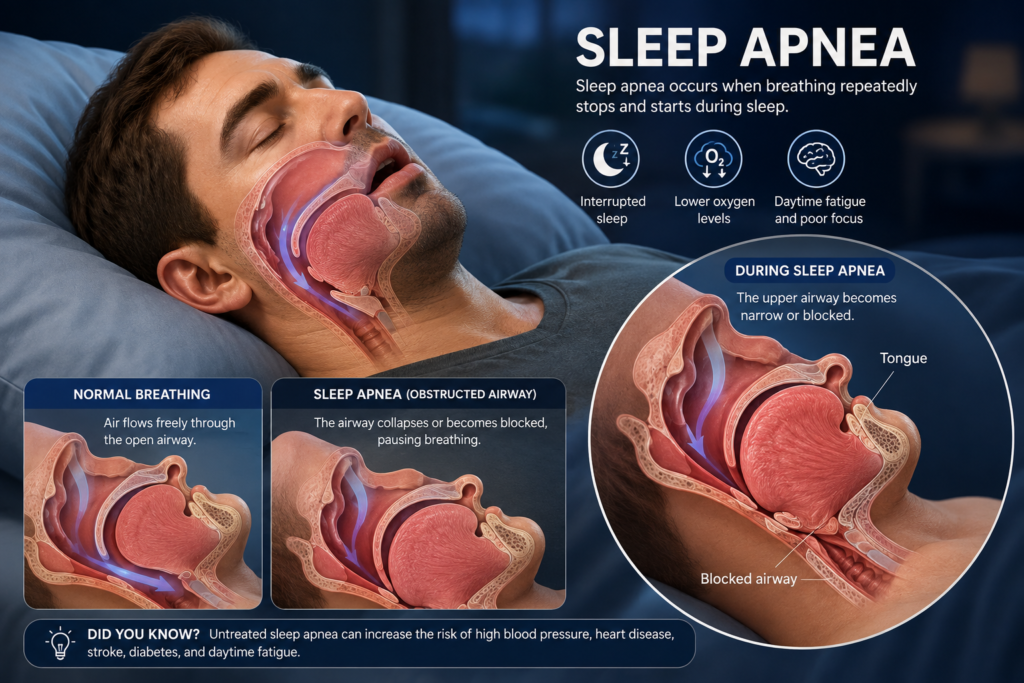
During normal sleep, the muscles around the upper airway relax, but the airway generally remains open enough for air to reach the lungs.
Breathing may stop completely or become significantly reduced. The brain detects the change and triggers a response to restore normal breathing. This can cause brief awakenings or changes in sleep that the person may not remember the next morning.
These events can happen repeatedly throughout the night.
As a result, a person may spend enough hours in bed but still wake up feeling tired or unrefreshed.
What Causes Sleep Apnea?
There are several types of sleep apnea. The most common is obstructive sleep apnea (OSA).
OSA
Obstructive sleep apnea occurs when the upper airway becomes partially or completely blocked during sleep.
When we fall asleep, the muscles that help keep the airway open naturally relax. In some people, the tissues in the throat can narrow the airway enough to interfere with normal airflow.
The brain continues to send signals to breathe, but air cannot move normally through the narrowed airway.
Eventually, the brain detects the problem and triggers a response that helps reopen the airway. Breathing then resumes.
This cycle may repeat many times during the night.
Central Sleep Apnea(CLA)
CLA is different from obstructive sleep apnea.
In CLA, the airway may not be blocked. Instead, the brain temporarily fails to send the appropriate signals to the muscles responsible for breathing.
CLA is less common and can be associated with certain medical conditions, medications, or other factors.
Some people may also have a combination of obstructive and CLA.
Who Is at Risk of Sleep Apnea?
Breathing disturbances during sleep can affect people of different ages and body types. However, certain factors can increase the likelihood of developing the condition.
Risk factors can include:
- Excess body weight
- A narrow upper airway
- Enlarged tonsils or other anatomical features
- Family history of sleep apnea
- Increasing age
- Certain medical conditions
- Alcohol use, especially close to bedtime
- Smoking
- Some medications
- Sleeping on the back
It is important to understand that not everyone with this sleep disorder is overweight. Anatomy, genetics, age, and other factors can also play an important role.
Children can develop sleep apnea as well, particularly when enlarged tonsils or adenoids interfere with breathing during sleep.
Symptoms of Sleep Apnea
This sleep disorder can cause symptoms during the night and during the day.
Nighttime Symptoms
Common nighttime signs include:
- Loud or persistent snoring
- Pauses in breathing noticed by another person
- Gasping, choking, or snorting during sleep
- Restless sleep
- Frequent awakenings
- Dry mouth in the morning
- Night sweats
- Frequent nighttime urination
Daytime Symptoms
Because sleep apnea can repeatedly disturb normal sleep, people may experience:
- Excessive daytime sleepiness
- Fatigue
- Difficulty concentrating
- Memory problems
- Irritability or mood changes
- Morning headaches
- Reduced alertness
- Feeling unrefreshed after sleeping
One important warning sign is excessive sleepiness during the day despite spending enough time in bed.
Why Is Sleep Apnea a Problem?
Healthy sleep allows the body and brain to recover.
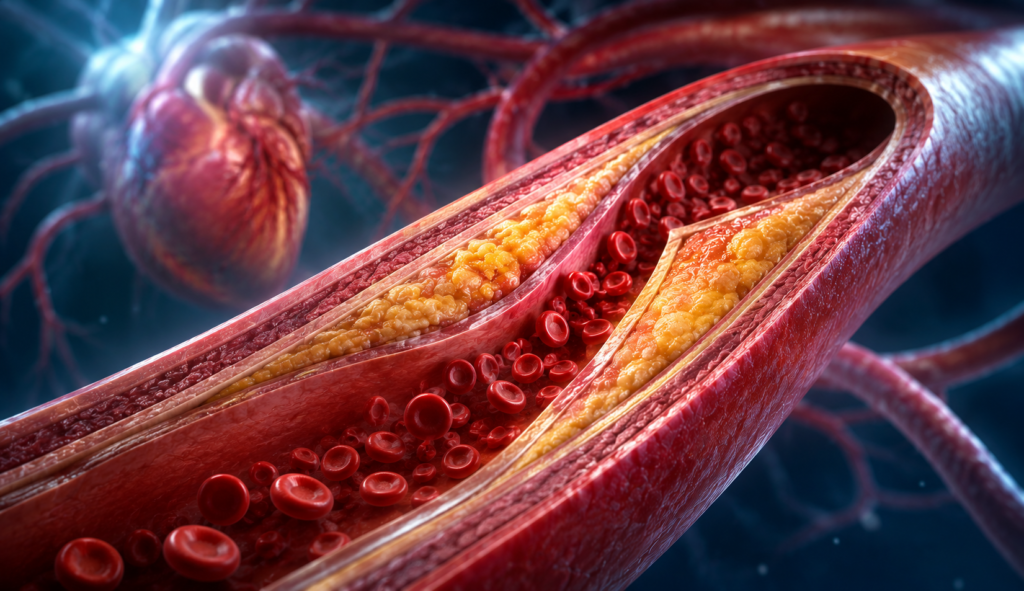
Repeated interruptions in breathing can prevent normal, restorative sleep. During breathing interruptions, oxygen levels may fall and the body can activate stress responses that help restore normal breathing. Repeated drops in oxygen can place additional stress on the cardiovascular system and affect how efficiently blood circulates through the body.
If this happens repeatedly over a long period, untreated sleep apnea can contribute to health problems.
OSA has been associated with conditions such as high blood pressure, cardiovascular disease, abnormal heart rhythms, and impaired glucose regulation.
Sleep apnea can also affect everyday safety.
Excessive daytime sleepiness can make it harder to remain alert while driving, studying, working, or performing tasks that require sustained attention.
For this reason, sleep apnea should not simply be dismissed as “bad sleep” or ordinary snoring.
How Is Sleep Apnea Diagnosed?
If sleep apnea is suspected, a healthcare professional will usually ask about symptoms, sleep habits, medical history, and risk factors.
A sleep study may then be recommended.
Sleep Study
A polysomnography, commonly called a sleep study, monitors several body functions while a person sleeps.
Depending on the type of study, monitoring may include:
- Breathing
- Blood oxygen levels
- Heart activity
- Brain activity
- Body movements
- Sleep patterns
Some adults suspected of having OSA may be suitable for a home sleep apnea test, which uses a simpler set of measurements.
The results help determine whether sleep apnea is present and how severe it may be.
One commonly used measurement is the Apnea-Hypopnea Index (AHI). It represents the average number of apnea and hypopnea events occurring per hour of sleep.
A healthcare professional should interpret sleep-study results together with the person’s symptoms and overall health.
How Is Sleep Apnea Treated?
Treatment depends on the type and severity of sleep apnea, its underlying cause, and the person’s individual circumstances.
Lifestyle Changes
For some people, lifestyle changes can improve sleep apnea symptoms.
These may include:
- Maintaining a healthy weight when appropriate
- Regular physical activity
- Avoiding alcohol close to bedtime
- Stopping smoking
- Maintaining a consistent sleep schedule
- Sleeping on the side rather than the back in some cases
Lifestyle changes may be recommended alone in selected cases or together with other treatments.
CPAP Therapy
Continuous Positive Airway Pressure (CPAP) is one of the most established treatments for OSA.
A CPAP machine delivers a continuous flow of air through a mask worn during sleep. The air pressure helps keep the upper airway open and prevents it from collapsing.
For people who need CPAP, using it consistently can improve sleep quality and reduce breathing interruptions.
Some people initially find wearing a mask uncomfortable, but different mask types and machine settings may improve comfort.
Oral Appliances
Some people with obstructive sleep apnea may benefit from an oral appliance.
These devices are worn during sleep and can help keep the airway open by repositioning the lower jaw or tongue.
They are generally fitted and managed by appropriately trained healthcare or dental professionals.
Positional Therapy
For people whose sleep apnea is worse when sleeping on their back, positional therapy may help.
The goal is to encourage a sleeping position that reduces airway obstruction.
Surgery
In selected cases, surgery may be considered when anatomical factors contribute significantly to airway obstruction or when other treatments are not suitable or effective.
The specific procedure depends on the individual’s anatomy and the cause of the airway obstruction.
Treatment of Underlying Causes
CLA requires a different approach because it involves the brain’s control of breathing rather than simply an obstructed airway.
Treatment may involve addressing an underlying medical condition, reviewing medications, or using specialized breathing support when appropriate.
Can Sleep Apnea Be Prevented?
Not every case of sleep apnea can be prevented.
Some risk factors, such as anatomy, genetics, and age, cannot be changed. However, maintaining a healthy lifestyle, avoiding smoking, limiting alcohol, staying physically active, and managing relevant health conditions may help reduce risk or improve symptoms.
If someone regularly snores loudly, wakes up gasping, or experiences significant daytime sleepiness, it is worth discussing these symptoms with a healthcare professional.
When Should You See a Doctor?
Consider talking with a healthcare professional if you or someone who sleeps near you notices:
- Repeated pauses in breathing during sleep
- Loud, persistent snoring
- Gasping or choking during sleep
- Significant daytime sleepiness
- Morning headaches
- Difficulty concentrating
- Poor-quality sleep despite spending enough time in bed
A particularly important warning sign is when another person repeatedly observes that your breathing stops during sleep.
Frequently Asked Questions
Is sleep apnea dangerous?
Sleep apnea can be a serious condition when untreated. Repeated breathing interruptions and sleep disruption can affect cardiovascular health, daytime alertness, and quality of life.
Can you have sleep apnea without snoring?
Yes. Although loud snoring is common with OSA, not everyone with the condition snores noticeably.
Can young people have sleep apnea?
Yes. Sleep apnea can occur in children, teenagers, and young adults. The causes and risk factors can differ depending on age.
Is sleep apnea curable?
Some people can significantly improve or resolve sleep apnea by addressing contributing factors, while others require ongoing treatment. The appropriate approach depends on the type and underlying cause.
Is CPAP the only treatment?
No. CPAP is an important treatment for OSA, but other options include lifestyle changes, positional therapy, oral appliances, and, in selected cases, surgery.
The Bottom Line
Sleep apnea is more than ordinary snoring. It is a sleep disorder in which breathing repeatedly stops or becomes reduced during sleep.
The most common form, OSA, occurs when the upper airway becomes blocked or narrowed during sleep. Central sleep apnea involves problems with the brain’s control of breathing.
Common signs include loud snoring, witnessed pauses in breathing, gasping during sleep, morning headaches, daytime sleepiness, and difficulty concentrating.
Because untreated sleep apnea can affect both sleep quality and overall health, recognizing the warning signs is important. Fortunately, several effective treatments are available, including lifestyle changes, positional therapy, CPAP, oral appliances, and selected surgical procedures.
If you suspect that you or someone you know may have sleep apnea, talk with a healthcare professional to determine whether further evaluation or a sleep study is appropriate.
Medical Disclaimer: This article is for general educational purposes only and does not replace professional medical advice, diagnosis, or treatment.

One Comment
Comments are closed.